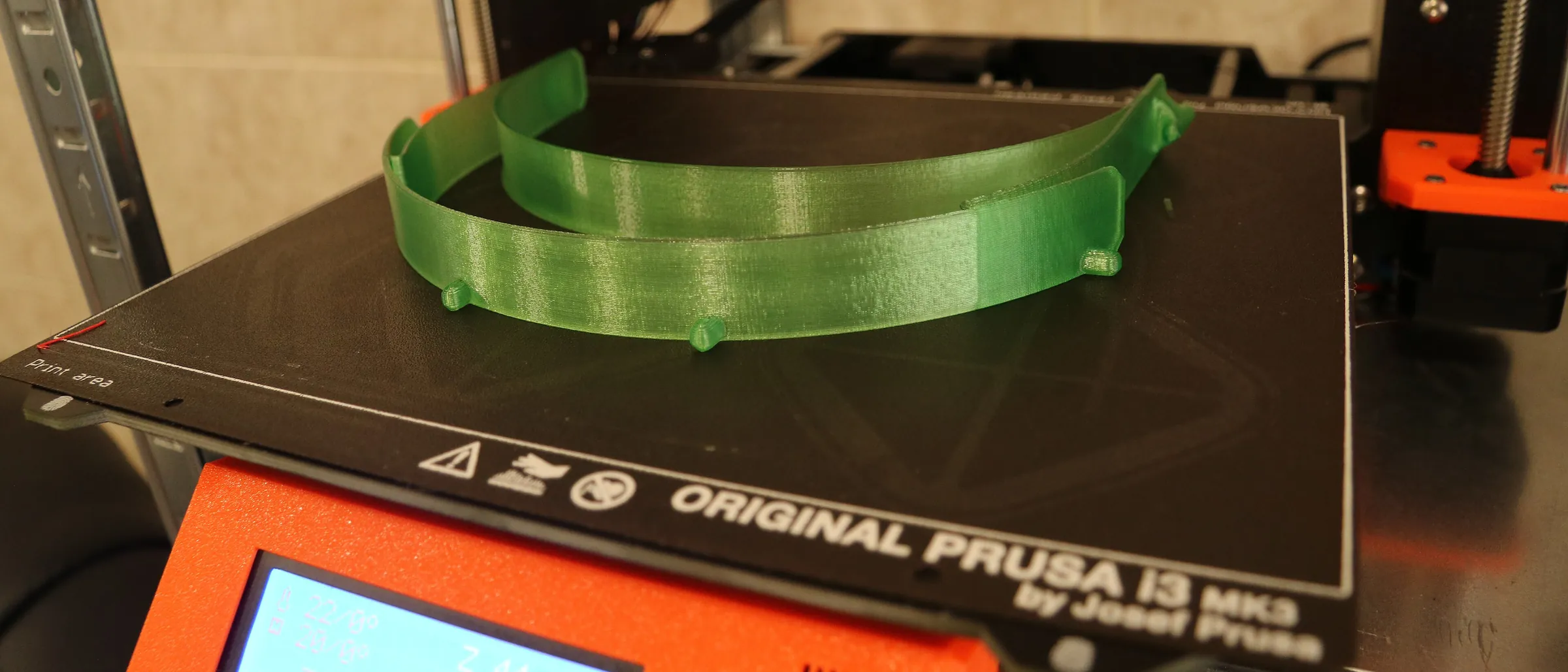
- Textured PEI holds PLA, PETG and TPU without glue in most cases, releases prints once cool, and is the standard plate on Bambu Lab printers.
- Smooth PEI gives a flat, matte bottom surface, but Bambu Lab asks for glue with every filament except PLA, and Prusa warns that PETG and TPU can damage the sheet.
- Prusa's satin sheet sits between the two. Most materials print on it without glue, and Prusa says polycarbonate prints better on it than on smooth or textured sheets.
- Bambu Lab's Cool Plate SuperTack is for PLA and PETG only, holding PLA at a 40 °C bed. Its Engineering Plate takes every Bambu filament, always with glue.
- Clean textured plates with dish soap and warm water (Bambu Lab), or with isopropyl alcohol of 90% or more (Prusa). Never use acetone on textured or satin coatings.
Textured PEI is the easier all-round plate: PLA, PETG and TPU stick to it without glue, prints release once it cools, and the coating is durable. Smooth PEI gives a flat, even bottom surface and holds small or sharp-cornered parts well, but every material except PLA needs a layer of glue on it, or PETG and TPU can tear the PEI when the part comes off. ABS, ASA, nylon and polycarbonate often need glue on either surface. Prusa's satin sheet sits between the two, and Bambu Lab's Cool Plate SuperTack is for PLA and PETG only.
The guidance here comes from Prusa's knowledge base on its flexible steel sheets and first layer problems, Prusa's product page for the satin sheet, and Bambu Lab's wiki pages on its build plates and on cleaning the textured plate, all read on 26 October 2026. Plate advice for single materials is also on the PETG settings page and the TPU settings page. Nanopack has no commercial relationship with Prusa or Bambu Lab.
What smooth, textured and satin plates are
All the plates here are thin, flexible steel sheets, which is why a finished print can be released by bending the sheet. Bambu Lab's are held to the heatbed by magnets. What differs is the coating.
A smooth PEI sheet carries a film of PEI plastic bonded to the steel. Prusa describes both sides of its smooth sheet as covered by a sticker of smoothed PEI. Bambu Lab's Smooth PEI Plate uses a PEI sheet stuck to 0.5 mm spring steel with a 3M heat resistant adhesive, and Bambu Lab says the thicker steel lowers the risk of the plate itself warping.
A textured sheet is powder coated. Bambu Lab sprays PEI powder onto both sides of a stainless steel sheet, and Prusa says the surface of its textured sheet is a special polymer, Ultem, which is a trade name for PEI. The coating leaves a grainy pattern on the bottom of every print. Bambu Lab ships the Textured PEI Plate as standard with its printers and also sells a dual sided plate with textured PEI on one face and smooth PEI on the other.
Prusa's satin sheet is also powder coated, with a lightly textured matte finish. Prusa places it between smooth and textured, both in how the surface feels and in how strongly prints stick.
Which plate for which filament
| Filament | Smooth PEI | Textured PEI | Prusa satin | Bambu Cool Plate SuperTack |
|---|---|---|---|---|
| PLA | No glue needed (Bambu Lab) | Usually no adhesive | Good adhesion, no separation layer | No glue, sticks at a 40 °C bed |
| PETG | Glue stick, or it can bond too hard and damage the sheet | Recommended by Prusa for PETG | Good adhesion | No glue, 55-60 °C bed on the second generation plate |
| TPU | Glue stick or Kapton tape (Prusa) | No separation layer needed (Prusa) | Prusa lists FlexFill 98A as compatible | Not compatible with TPU (Bambu Lab) |
| ABS, ASA | Glue | May need glue stick (Bambu Lab) | Listed as compatible | PLA and PETG only |
| PC | Glue | May need glue stick (Bambu Lab) | Prints better here, glue stick advised | PLA and PETG only |
| Nylon (PA) | Glue | May need glue stick (Bambu Lab) | Prusa sells a separate PA nylon sheet | PLA and PETG only |
Bambu Lab's rule for its Smooth PEI Plate is short: PLA is the only filament that goes on it without glue. Prusa's general sheet guidance says a glue stick separation layer may be needed for PETG, ASA, ABS and PC Blend on its sheets, and for prints with a large first layer. Its first layer guide adds nylon and flexible materials to the list of materials that get glue stick, and says plain PVA glue stick, not superglue.
When smooth PEI is the better choice
Smooth PEI leaves a flat, smooth and matte bottom on the part instead of a grain. Bambu Lab also claims better Z precision for parts that have to fit together closely. Prusa says that on its smooth sheet, prints with only a small area touching the plate or with sharp corners are less likely to come loose, and calls its adhesion excellent with most filaments and geometries.
The cost is that it can hold on too well. Prusa warns that PETG and TPU may bond strongly enough to damage the sheet when the print is removed, and Bambu Lab asks for glue with everything but PLA for the same reason, to keep the PEI from tearing. The glue acts as a release layer.
Smooth PEI is also the only Prusa sheet that takes acetone. Prusa's first layer guide allows it on the smooth sheet about once a month to refresh the surface, and says not to use it before printing PETG.
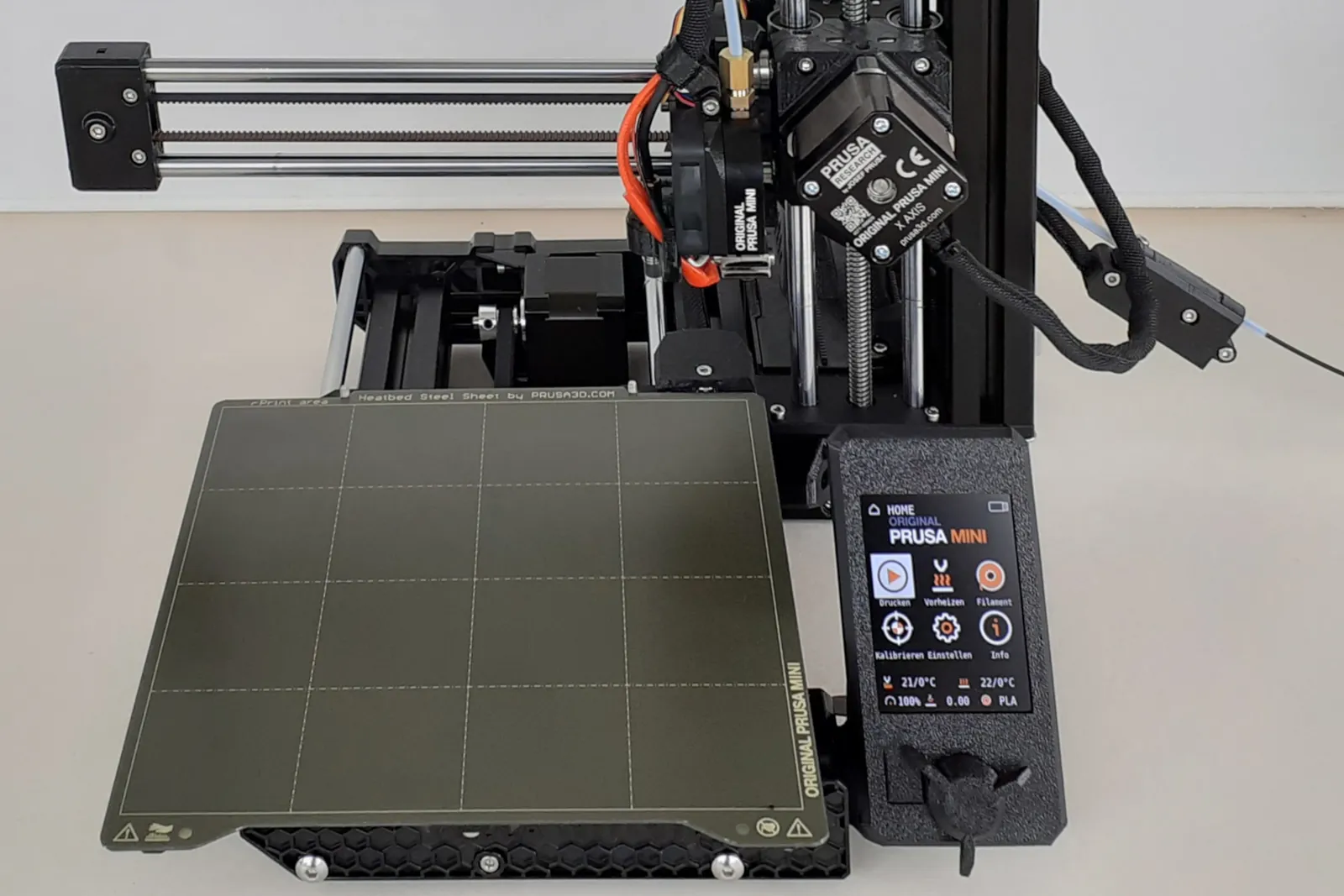
When textured PEI is the better choice
Textured PEI is the forgiving option. Bambu Lab says its textured plate grips most filaments without any adhesive, and Prusa recommends its textured sheet for materials that stick too well to a smooth surface, naming PETG, CPE and Flexfill, a TPU. Prints come away by themselves once the plate is cool; Bambu Lab suggests waiting until it reaches 35 °C or lower and flexing the plate if a part still holds. For PC, PA, ABS and ASA on the textured plate it says a layer of glue stick may be needed.
Cleaning is different for textured plates. Bambu Lab recommends dish soap, warm water and a sponge or plastic brush, because alcohol can spread finger grease around inside the texture without lifting it. The detergent must not contain oils or moisturisers. Acetone is forbidden on Bambu Lab's textured plate and on Prusa's textured and satin sheets. When a textured plate loses grip after washing, Bambu Lab suggests lightly sanding it with fine sandpaper or steel wool to expose a fresh surface, then cleaning off the dust.
Prusa's satin and special purpose sheets
Prusa describes the satin sheet as fully compatible with a wide range of filaments, including ABS, ASA and FlexFill 98A, and says most materials print on it without a separation layer. It singles out polycarbonate as printing better on satin than on smooth or textured sheets, with a glue stick layer advised if you print PC often. Prusa warns against acetone on the satin sheet, because it leaves tiny cracks in the texture.
Prusa also makes sheets for materials that grip PEI badly. The PA nylon sheet has a matte texture similar to satin and suits most polyamides and PETG. Prusa says other materials may not stick to it well enough. A PP sheet exists for polypropylene, which adheres poorly to Prusa's textured and satin sheets. A HighTemp sheet for the Pro HT90 printer is meant for PEEK, PEKK, PEI and PPSU, on which, Prusa says, PLA and PETG do not adhere very well.
Bambu Lab's Cool Plate SuperTack and Engineering Plate
The Cool Plate SuperTack has a fine, nearly glossy texture and is meant for glue-free PLA and PETG. Bambu Lab says PLA holds firmly at a bed temperature of only 40 °C, that PETG needs 55-60 °C on the second generation plate, and that some printers such as the X and P series still use shared settings that put PETG nearer 65 °C. It claims less than 20% loss of adhesion after 300 prints, measured with PLA Basic on an A1. The coating is softer than textured PEI and scratches more easily, and Bambu Lab warns that any material other than PLA or PETG may damage it.
The Engineering Plate is the reverse. It has a corrosion resistant coating aimed at ABS, ASA, PC and PA, and Bambu Lab calls it compatible with all of its filaments, provided glue is applied before every print. It gives parts a smooth, nearly glossy bottom.
Cleaning and removing prints
Prusa does not ask for cleaning before every print if the surface has not been touched with hands or dirty tools. When it does need cleaning, Prusa recommends isopropyl alcohol of 90% or more and warns that weaker solutions and cosmetic alcohol can contain oils. Bambu Lab's test for a clean plate is to run water over it: on a clean plate the water spreads into a thin film, and on a greasy one it runs in streams and beads.
Both makers say to let the plate cool before removing a print, and Prusa notes that reheating the bed to the print temperature and cooling it again can release a stuck part. For a part stuck to a Cool Plate SuperTack, Bambu Lab suggests warming the plate to about 50 °C or wetting the edge with alcohol before using a scraper. Prusa treats its sheets as consumables whose coating wears with use. If corners lift even on a clean plate, the cause is usually shrinkage, covered in the warping guide.
Frequently asked questions
Why use a smooth PEI plate?
For a flat, smooth bottom surface on the part and for small or sharp-cornered prints, which Prusa says are less likely to come loose on its smooth sheet. Bambu Lab also claims better Z precision for parts that must fit closely. Use glue with anything but PLA.
What is a textured PEI plate used for?
It is the general purpose plate. Bambu Lab says it holds most filaments without adhesive and that prints release once it cools to 35 °C or lower. Prusa recommends its textured sheet for PETG and TPU, which stick too well to smooth PEI.
Can you print PETG on smooth PEI?
Yes, with a layer of glue stick. Prusa warns that PETG can bond to smooth PEI strongly enough to damage the sheet when the print comes off, and Bambu Lab asks for glue on its Smooth PEI Plate with every filament except PLA.
Can you print ASA on textured PEI?
Yes. Bambu Lab lists ASA among the filaments that work on its Textured PEI Plate, noting that ABS, ASA, PC and PA may need a layer of glue stick there.
Which build plate is best for TPU?
Textured PEI. Prusa says its textured sheet needs no separation layer for TPU, while smooth and satin sheets need glue stick or Kapton tape. Bambu Lab says every one of its plates except the Cool Plate SuperTack works with TPU.
Can I clean a PEI plate with acetone?
Only a smooth PEI sheet, and sparingly. Prusa allows acetone on its smooth sheet about once a month, never before a PETG print, and forbids it on textured and satin sheets. Bambu Lab says acetone damages its textured plate.