- Prusament gives 260 ± 10 °C at the nozzle, Polymaker 230-260 °C and Bambu Lab 240-270 °C. All three printed their test bars at 260-265 °C, so the published strength figures belong to the upper half of each range.
- Bed temperatures do not overlap: 110 ± 5 °C for Prusament on PEI or powder coated sheets, 75-95 °C for Polymaker on PC or textured PEI, 80-100 °C for Bambu Lab, all with glue.
- The fan is the widest disagreement: off for Polymaker, 30% for Prusament with 0-50% by geometry, 0-80% for Bambu Lab. ASA's layer bond is weak (11 MPa interlayer adhesion in Prusa's test, against 17 MPa for PLA), which argues for little or no fan.
- All three want an enclosure. Bambu Lab specifies a 45-60 °C chamber, and Polymaker printed its own test bars with the surrounding air at 90 °C.
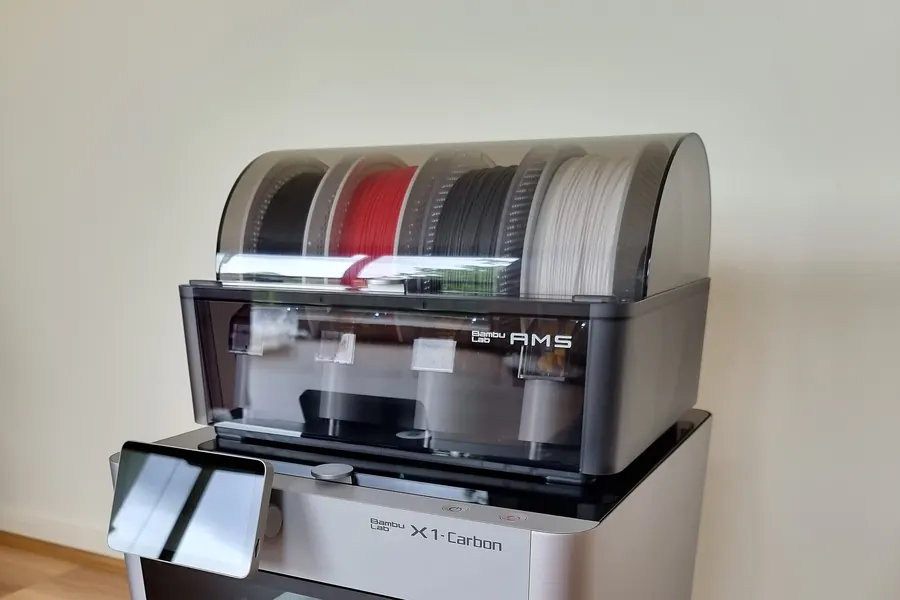
- Drying: 80 °C for 4 h (Prusa), 70 °C for 7 h (Polymaker), 80 °C for 8 h (Bambu Lab). ASA takes up about as much water as PLA, 0.45% saturated in Bambu Lab's test, and the AMS 2 Pro cannot reach its drying temperature.
- In a 2019 emission chamber test ASA released about three and a half times as many ultrafine particles per minute as ABS, though Prusa says it smells less.
Start ASA at 250-260 °C at the nozzle, which is the only band all three data sheets on this page share. Set the bed to the filament maker's figure, because here they do not overlap at all: Polymaker says 75-95 °C, Bambu Lab 80-100 °C and Prusament 110 °C. Keep the part cooling fan off or low, 30% at most unless an overhang needs more. Print with the printer closed, ideally with the chamber at 45-60 °C, and dry a spool that has been open for a while at 70-80 °C for 4 to 8 hours. The fan is the setting the makers disagree on most: Polymaker says off, Prusament says 30% and Bambu Lab allows anything up to 80%.
The figures below come from the technical data sheets of Prusament ASA, Polymaker ASA and Bambu ASA, and from the three companies' knowledge bases, read on 8 October 2026. Each sheet describes that company's own resin. The densities alone show they are different materials: 1.05 g/cm³ for Bambu ASA, 1.07 for Prusament and 1.13 for Polymaker. For how ASA compares with ABS in sunlight, see PLA vs PETG vs ABS; for drying in general, the filament drying guide. Nanopack has no connection with any of the three companies.
ASA settings by manufacturer
| Setting | Prusament ASA | Polymaker ASA | Bambu ASA |
|---|---|---|---|
| Nozzle | 260 ± 10 °C | 230-260 °C | 240-270 °C |
| Bed | 110 ± 5 °C (105 °C for the first layer in Prusa's guide) | 75-95 °C | 80-100 °C |
| Surface | Satin, smooth PEI or powder coated sheet, with glue stick | PC or textured PEI, glue when needed | Engineering, High Temperature or Textured PEI plate, with glue |
| Part cooling fan | 30% (0-50% by geometry) | Off | 0-80% |
| Speed | Up to 200 mm/s | 50-200 mm/s | Under 250 mm/s |
| Retraction | Not given | 1-3 mm at 20-40 mm/s | 0.8-1.4 mm at 20-40 mm/s |
| Enclosure | Enclosure, or a draft shield in PrusaSlicer | Closed chamber needed | Chamber at 45-60 °C |
| Drying | 80 °C, 4 h | 70 °C, 7 h | 80 °C, 8 h (forced air oven) |
| Test bars printed at | 265 °C nozzle, 110 °C bed | 260 °C nozzle, 90 °C bed, 90 °C surroundings, fan off | 260 °C nozzle, 80 °C bed, 200 mm/s |
The last row matters when reading the strength figures on the same sheets. Every number in them comes from bars printed at 260-265 °C, near the top of each range, and Polymaker's bars were printed with the air around them at 90 °C, far warmer than a hobby enclosure gets. Bambu Lab also annealed and dried its bars at 80 °C for 12 hours before testing.
Nozzle temperature and layer adhesion
Layer bonding is ASA's weak point, and nozzle temperature is the main setting that controls it. Prusa Polymers measures interlayer adhesion on its own filaments with one method: 11 MPa for Prusament ASA, against 17 MPa for its PLA and 18 MPa for its PETG, while the ASA filament itself yields at 40 MPa. Bambu Lab's impact test across the layers puts ASA at 4.9 kJ/m², below its ABS at 7.4, PETG at 13.6 and PLA at 13.8. Polymaker's ASA keeps 32 MPa of its 43.8 MPa tensile strength when pulled across the layers, and its elongation at break drops from 6.7% to 1.65%.
For a part that carries load, stay in the upper half of the range, where the test bars were made. None of the three sheets gives strength figures for prints made at the bottom of its range, such as the 230 °C Polymaker allows.
Bed temperature and warping
Prusa's ASA guide calls warping the material's main disadvantage and puts it down to the temperature difference between the part and the air around it. Polymaker measures a glass transition of 98 °C. A hot bed keeps the bottom layers warm and close to their printed size while the layers above cool and shrink, and the pull between the two lifts the corners.
The three bed figures cover 75 °C to 115 °C, and the build surface explains part of the spread. Prusament's 110 °C is set for Prusa's PEI and powder coated sheets with glue stick, and Prusa's guide drops the first layer to 105 °C. Polymaker's 75-95 °C assumes PC or textured PEI; its older product sheet named BuildTak or Magigoo instead. Bambu Lab gives 80-100 °C in the data sheet and 90-100 °C in its filament guide, with glue on all three of its plates. Prusament suggests a 3 mm brim to hold the edges and corners of larger objects, and a skirt raised to the full height of the part, which works as a draft shield on an open printer.
Part cooling fan
The fan helps overhangs and bridges and hurts the layer bond, since it chills the layer the next one has to fuse to. The makers weigh that differently. Polymaker says off, on the current data sheet and on its older product sheet. Prusament gives 30% and a 0-50% range, with a footnote: 30% or more for overhangs and bridges, and off for larger prints without bridges. Bambu Lab allows 0-80% and states what its profile achieves, overhangs to about 70° and bridges to about 40 mm.
Given ASA's layer adhesion numbers, the safer default is off or near off for bulky parts. Where a model has bridges or steep overhangs, PrusaSlicer, Bambu Studio and OrcaSlicer can all raise the fan for those features alone instead of for the whole print.
Enclosure and chamber temperature
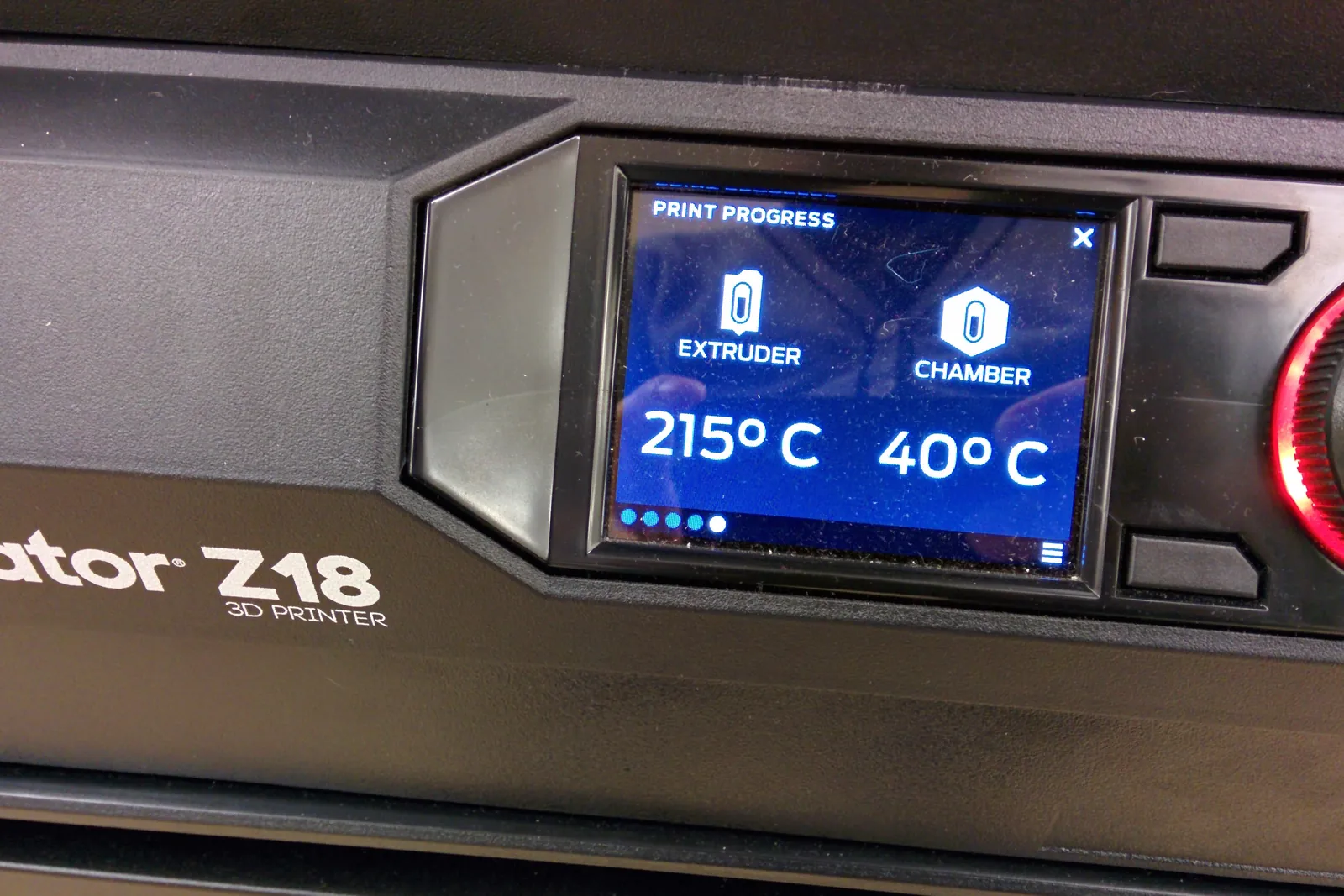
All three makers want ASA printed enclosed. Bambu Lab is the one to give a number, a chamber at 45-60 °C. The Voron project, whose enclosed printers are built largely from printed parts, says chambers in its machines commonly reach 55-60 °C. It names ABS as the primary material for those parts, supports ASA, and advises against PLA and PETG because their glass transition is too low for that chamber.
Prusa's guide offers PrusaSlicer's draft shield, a printed wall around the part, for printers without an enclosure. It also warns against printing ASA for long periods in an enclosure that is not ventilated, because of the fumes covered below.
Drying ASA: temperature and time
ASA takes up little water. Prusament measured 0.16% after 24 hours and 0.17% after seven days, at 24 °C and 22% humidity. Bambu Lab gives a saturated figure of 0.45% at 25 °C and 55% humidity, and Polymaker an equilibrium of 0.40% at 70% humidity. In Bambu Lab's filament guide the same test gives 0.43% for its PLA, 0.32% for PETG and 0.65% for ABS, which puts ASA close to PLA.
| Source | Method | Temperature | Time |
|---|---|---|---|
| Prusa knowledge base (Prusament) | Oven, dryer or dehydrator | 80 °C | 4 h |
| Polymaker data sheet v6.0 | Not specified | 70 °C | 7 h |
| Polymaker product sheet v1.3 (older) | Not specified | 80 °C | 8 h |
| Bambu ASA data sheet v3.0 | Forced air oven | 80 °C | 8 h |
| Bambu Lab drying guide | Forced air oven | 75-85 °C | 8 h |
| Bambu Lab drying guide | Printer bed, H, X, P2S and P1S series | 90-100 °C | 12 h |
| Bambu Lab drying guide | AMS HT | 80 °C | 8 h |
| Bambu Lab drying guide | AMS 2 Pro | Not compatible |
Bambu Lab's drying guide marks ASA drying as recommended, and desiccant during printing as not required but recommended. Its data sheet asks for storage and printing below 20% humidity. The AMS 2 Pro is ruled out because it heats only to 65 °C; the AMS 2 Pro and AMS HT guide covers both units. Bambu Lab's ASA comes on a PC and ABS spool rated to 90 °C, so 80 °C in an oven is within the spool's limit. Bambu Lab rules out microwave and kitchen ovens for this, and wants the filament kept away from the heater.
Fumes and ventilation
Prusa says ASA smells less than ABS. Smell and particle count are separate measurements, though. In a study published in 2019, Gu and colleagues at Fraunhofer WKI printed eight filaments in a standard emission test chamber, and ASA gave the highest particle emission rate in the 5.6-560 nm range, 1.7 × 10¹¹ particles per minute, against (4.7 ± 1.1) × 10¹⁰ for ABS, about three and a half times as many. The highest total VOC rate, 40.5 µg/min, came from an ABS-based filament. The study used a single desktop printer and eight specific products, so another brand of ASA can come out differently.
Prusa calls ASA's fumes potentially dangerous and asks for a well ventilated room, or an enclosure with active filtration, because the material contains styrene compounds. Bambu Lab's data sheet lists the odour as "Odorless", which is a statement about smell only.
Annealing and finishing
Bambu Lab suggests annealing ASA prints at 80-90 °C for 6 to 12 hours, and warns that some parts deform and warp in the process, depending on size, structure and infill. Like ABS, ASA responds to acetone: Prusa notes it can be smoothed, glued and welded with it, and that acetone smoothing leaves a glossy surface.
Where the documents disagree
Bambu Lab's ASA data sheet gives 240-270 °C at the nozzle, 80-100 °C on the bed and under 250 mm/s. Its filament guide gives 240-280 °C, 90-100 °C and under 300 mm/s for the same filament. For drying, the data sheet says 80 °C for 8 hours, while the drying guide says 75-85 °C, and the drying guide calls drying recommended where the filament guide says optional.
Polymaker's current data sheet, labelled v6.0, dries ASA at 70 °C for 7 hours. The product information sheet v1.3, still on its server, says 80 °C for 8 hours and 30-50 mm/s. Prusa's data sheet allows ± 10 °C around 260 °C at the nozzle, and its shop page ± 5 °C. A slicer profile copied from one of these documents can therefore sit 10 °C away from a profile copied from another, for the same spool.
Frequently asked questions
What nozzle temperature should I use for ASA?
250-260 °C is inside all three makers' ranges: Prusament 260 ± 10 °C, Polymaker 230-260 °C and Bambu Lab 240-270 °C. Each printed its test bars at 260-265 °C, so stay near the top of that band for parts that carry load, since layer adhesion is ASA's weak point.
What bed temperature does ASA need?
It depends on the brand and the sheet. Prusament specifies 110 ± 5 °C on PEI or powder coated sheets with glue stick, and Prusa's guide uses 105 °C for the first layer. Polymaker gives 75-95 °C on PC or textured PEI, and Bambu Lab 80-100 °C with glue.
Should the part cooling fan be on when printing ASA?
Off or low for most parts. Polymaker says off, Prusament recommends 30% within 0-50% and suggests turning it off for larger prints without bridges, and Bambu Lab allows 0-80%. More fan helps overhangs and bridges but weakens the bond between layers.
What temperature and how long should I dry ASA?
Prusa gives 80 °C for 4 hours, Polymaker's current data sheet 70 °C for 7 hours, and Bambu Lab 80 °C for 8 hours in a forced air oven, 90-100 °C for 12 hours on a printer bed, or 80 °C for 8 hours in the AMS HT. The AMS 2 Pro is not compatible because it heats only to 65 °C.
Can ASA be printed without an enclosure?
All three makers recommend one. Bambu Lab specifies a chamber at 45-60 °C, and Prusa's guide offers PrusaSlicer's draft shield for open printers. Warping from the temperature difference between the part and the surrounding air is the main problem Prusa names.
Is ASA safer to print than ABS?
Not on particle counts. In a 2019 chamber test by Gu and colleagues, ASA emitted 1.7 × 10¹¹ particles per minute against 4.7 × 10¹⁰ for ABS. Prusa says ASA smells less but still calls its fumes potentially dangerous and asks for a ventilated room or a filtered enclosure.
Sources
- Prusament ASA technical data sheet v1.1 (2022)
- Prusament PLA technical data sheet (interlayer adhesion)
- Prusament PETG technical data sheet (interlayer adhesion)
- Prusa Knowledge Base: ASA
- Prusa Knowledge Base: Drying filament
- Prusa store: Prusament ASA product page
- Polymaker Wiki: Polymaker ASA technical data sheet
- Polymaker ASA technical data sheet v6.0 (PDF)
- Polymaker PolyLite ASA product information sheet v1.3
- Bambu ASA technical data sheet v3.0
- Bambu Lab filament guide
- Bambu Lab Wiki: Filament drying guide (Appendix I, drying parameters)
- Voron Design: Materials
- Gu J. et al. (2019), Characterization of particulate and gaseous pollutants emitted during operation of a desktop 3D printer, Environment International 123:476-485
.jpg)