- Active packaging absorbs substances from the food or its headspace, or releases substances into them, to extend shelf life or maintain the condition of the food.
- Intelligent packaging monitors the condition of packaged food or its surroundings and communicates it, for example through a time-temperature indicator or a freshness indicator.
- In the EU, Regulation (EC) No 1935/2004 and Commission Regulation (EC) No 450/2009 define both categories and require parts perceived as edible to be labelled "DO NOT EAT".
- Regulation 450/2009 foresees a Union list of authorised substances for active and intelligent components, but the Commission has not adopted it, so composition is still regulated nationally.
- Common active systems include iron-based oxygen absorbers, potassium permanganate ethylene scavengers, drip pads and carbon dioxide emitters; common intelligent systems include time-temperature indicators, oxygen indicators and RFID tags.
- In the United States, packaging substances usually go through FDA's Food Contact Notification process, which has a 120-day review period and applies only to the named manufacturer.
Active packaging is packaging designed to change the conditions inside the pack: it absorbs something from the food or the headspace around it, or releases something into them, to extend shelf life or keep the food in good condition. Intelligent packaging monitors the condition of the food or its surroundings and passes that information on, usually as a colour change or a readable code. An iron sachet that removes oxygen is active. A label that changes colour after the pack has spent too long above a set temperature is intelligent.
The two are often grouped together as "smart packaging", and EU law regulates them in the same instrument. They do different jobs and raise different safety questions, which is why it helps to keep them apart.
Active vs intelligent packaging: the difference
Active packaging changes the conditions inside the pack. Intelligent packaging reports on them. An active component takes part in a chemical or physical process that alters the headspace or the food surface, such as taking up oxygen or releasing ethanol vapour. An intelligent component leaves the food alone and gives a reading.
A quick test: take the component out of the pack. If the food would spoil faster or change in quality, the component was active. If the food would behave the same but you would know less about it, the component was intelligent.
Some packs carry both. A modified atmosphere pack of fish can hold an absorbent pad under the fillets (active) and a time-temperature label on the lid (intelligent). The classification is made component by component, and each part has to meet the rules for its own kind.
How EU law defines them
The legal definitions come from two EU regulations. Regulation (EC) No 1935/2004 is the framework regulation for all food contact materials and first defined the two categories. Commission Regulation (EC) No 450/2009 of 29 May 2009 sets the specific rules for active and intelligent materials and repeats the definitions in its Article 3.
Under Article 3(a) of Regulation 450/2009, active materials and articles are "materials and articles that are intended to extend the shelf-life or to maintain or improve the condition of packaged food". The definition continues that they are designed to deliberately incorporate components that release substances into, or absorb them from, the packaged food or the environment surrounding it. Article 3(b) defines intelligent materials and articles as "materials and articles which monitor the condition of packaged food or the environment surrounding the food".
Article 3 of Regulation 1935/2004, the general safety rule, says materials must not transfer constituents to food in quantities that could endanger health, change the composition of the food unacceptably, or spoil its taste, smell or texture. Article 4 of the same regulation adds two conditions specific to this category. Active materials must not change the food in ways that could mislead consumers, such as masking spoilage, and any change to composition must comply with food law, including the additive rules. Intelligent materials must not give information about the condition of the food that could mislead consumers.
Recital 5 of Regulation 450/2009 describes the two ways an active substance is usually built in: in a separate container such as a small paper sachet, or incorporated directly into the packaging material, as in the plastic of a bottle. Recital 14 notes that intelligent components may sit on the outer surface of the pack, separated from the food by a functional barrier, which the regulation defines as one or more layers of food contact material that keep the finished article safe.
Active packaging examples
Active systems fall into two groups. Absorbers, also called scavengers, remove oxygen, ethylene, water or carbon dioxide from the pack. Releasers, also called emitters, add carbon dioxide, ethanol vapour, an antimicrobial or an antioxidant. EFSA's summary is that active materials "absorb or release substances to improve the quality of packaged food and/or to extend its shelf life".
Oxygen scavengers
Oxygen left in a sealed pack drives lipid oxidation, rancid flavours, colour loss and the growth of moulds and aerobic bacteria. Oxygen scavengers remove it after sealing, and oxygen absorbers are the first example in most accounts of active packaging, including EFSA's.
Most commercial oxygen absorbers are iron based: finely divided iron reacts with oxygen and moisture and turns to iron oxide. Mitsubishi Gas Chemical, which makes the Ageless range, describes the principle as "Iron absorbs oxygen when it rust" and says the product brings the oxygen concentration to 0.1% or lower.
Sachets are rated by the volume of oxygen they can take up. In a 1993 paper on museum uses of Ageless, Daniel and Lambert explain that the Z-100 and Z-1000 designations give "the milliliters of oxygen with which a single packet will react". Since oxygen is about one fifth of air, a 100 mL sachet handles the oxygen in roughly 500 mL of trapped air.
Typical foods include nuts, dried meat, cheese, fresh pasta, bakery products and coffee. A 2015 review by Biji and colleagues in the Journal of Food Science and Technology lists Ageless, Freshilizer, Freshmax and Oxyguard among iron-based products.
Ethylene scavengers
Ethylene is a plant hormone that speeds ripening, softening and chlorophyll loss in fruit and vegetables, so removing it slows those changes. Potassium permanganate is the most widely used chemical option. According to a 2022 review in Membranes by Mariah and colleagues, it oxidises ethylene and turns from purple to brown as it is used up. Because it is toxic, it is kept out of contact with food: it is applied to carriers such as silica gel or alumina and packed in sachets.
The same review covers adsorbents such as zeolites and activated carbon, and catalytic approaches such as palladium-modified zeolite and titanium dioxide, which oxidises ethylene to carbon dioxide and water under UV light.
Moisture absorbers, desiccants and drip pads
For dry foods, desiccants such as silica gel, molecular sieves and calcium oxide keep humidity low. For fresh meat, fish and poultry, the job is to soak up the liquid that seeps from the product. Biji and colleagues describe drip-absorbent pads as two layers of microporous polyethylene or polypropylene with a superabsorbent polymer between them, and name Thermarite and Peaksorb, both from Australia, as commercial examples.
Carbon dioxide absorbers and emitters
Freshly roasted coffee gives off carbon dioxide after roasting, and the Biji review notes that coffee sealed straight away can release enough gas to burst the pack. That is the main use of carbon dioxide scavengers.
Carbon dioxide emitters do the reverse. Higher carbon dioxide levels extend the shelf life of many meat and bakery products, and emitters help reach or hold the level a modified atmosphere pack is designed for. The Biji review names Ageless type G and FreshPax type M. Some sachets do both jobs. In 2014 EFSA assessed a mixture based on sodium erythorbate, iron sulphate, sodium carbonates and calcium hydroxide, packed in sachets that absorb oxygen and emit carbon dioxide, and found no safety concern as long as the sachets keep their contents away from the food.
Antimicrobial, ethanol and antioxidant releasers
Antimicrobial packaging aims to slow spoilage or pathogenic microorganisms on the food surface or in the headspace, using agents such as organic acids, enzymes, silver ions or chitosan. Ethanol emitters are sachets that release ethanol vapour to hold back mould; Biji and colleagues describe Ethicap and Antimold as sachets that absorb moisture and release ethanol vapour.
Antioxidant films release compounds such as tocopherol (vitamin E), vitamin C or plant extracts to slow lipid oxidation in fatty foods. In a 2019 study in Foods, Andrade and colleagues packed salami slices in a whey protein film containing rosemary extract, and the film delayed lipid oxidation for at least 30 days.
Under Regulation 450/2009, a substance released into food to do a job there is a "released active substance", and Article 11(3) treats it as a food ingredient for labelling.
Where nanomaterials come in
Nanoscale materials appear mostly in antimicrobial and barrier roles. A 2024 review in Foods on nanofillers describes silver nanoparticles as antimicrobials that release silver ions taken up by bacterial cells, and zinc oxide nanoparticles as a source of zinc ions and reactive oxygen species. In one study it cites, agar films with 2 wt% silver nanoparticles reduced viable E. coli on wrapped beef by about 95% against control films after 15 days at 5 °C.
Nanoclays such as montmorillonite work as carriers: silver particles dispersed on montmorillonite gave much finer control of silver ion release in work the review cites. The open question is migration into food, though the review also reports modelling in which consumer exposure from nanoparticles in plastic food contact materials was negligible.
EU law treats engineered nanoparticles separately. Recital 14 of Regulation 450/2009 says substances engineered to a particle size where their properties differ significantly from the bulk form should not be covered by the functional barrier concept, and Article 5 excludes them from the functional barrier exception. A nanomaterial behind a barrier layer still needs its own assessment. The wider use of nanomaterials in packaging is covered in nanotechnology in food packaging.
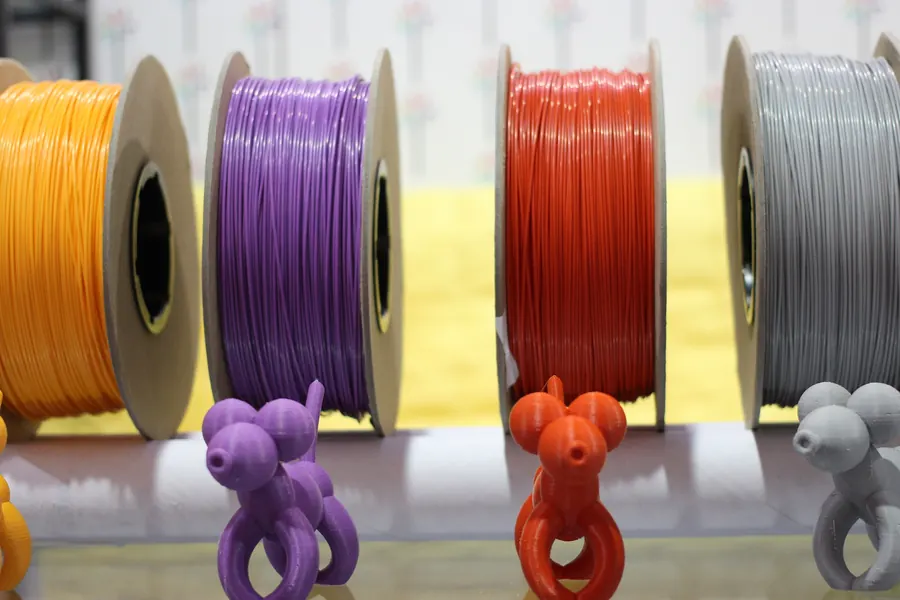
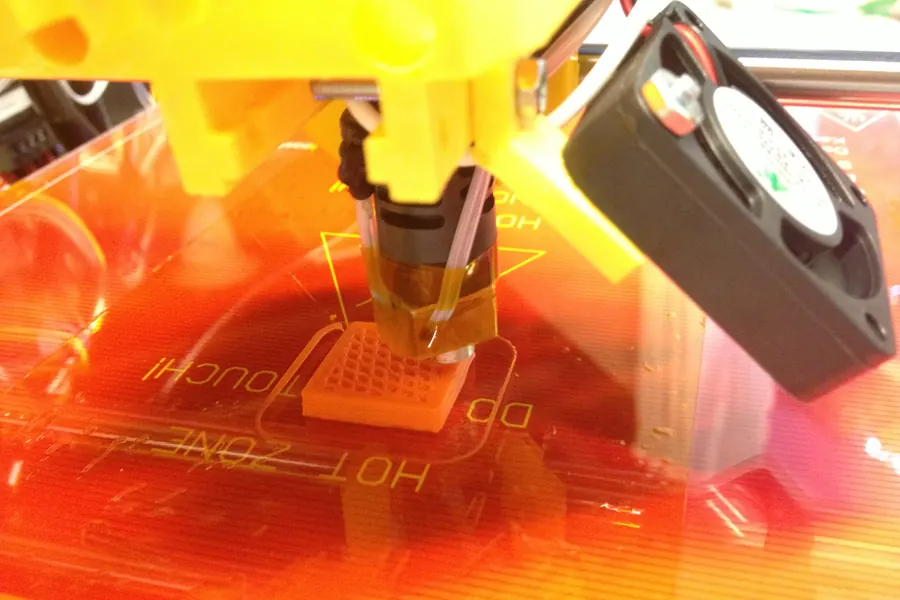
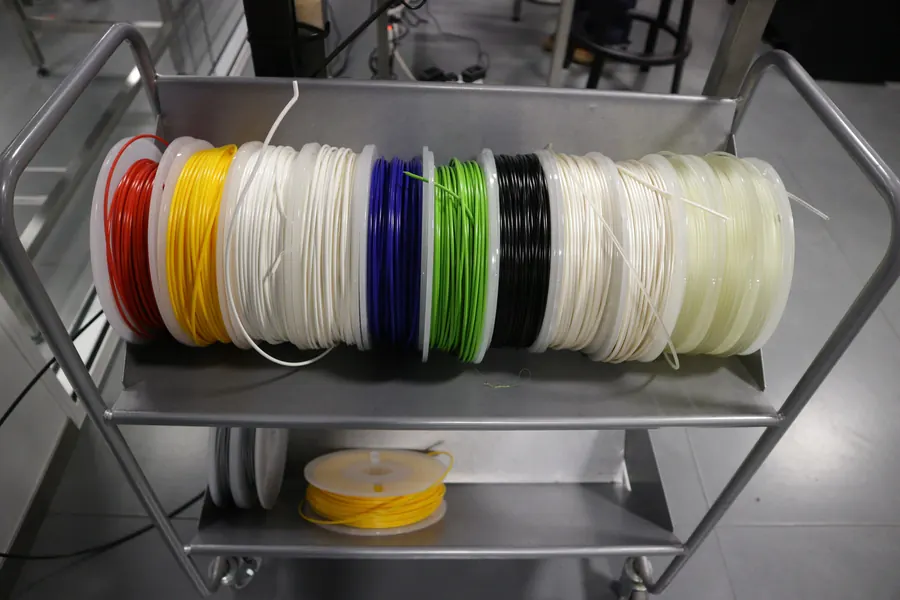
Polymers loaded with nanoscale fillers are also used outside packaging, for example graphene-filled 3D printing filaments, described in carbon fiber and graphene filament. The base plastics are compared in 3D printing filament types and PLA vs PETG vs ABS.
Intelligent packaging examples
Intelligent packaging in food usually takes one of three forms: indicators that change colour, data carriers that store or link to information, and sensors that measure something and produce a signal. EFSA's examples for the category are freshness indicators and temperature monitoring systems.
Time-temperature indicators
A time-temperature indicator (TTI) records the combined effect of time and temperature on a product. Full-history indicators change gradually at a rate that depends on temperature. Partial-history indicators respond only once a threshold temperature has been passed.
The Biji review sorts commercial TTIs by mechanism. Diffusion-based indicators move a coloured substance at a temperature-dependent rate, with 3M MonitorMark as the example.
Enzymatic indicators use an enzyme reaction that lowers the pH and triggers a colour change. The review gives the Vitsab label as the commercial example of this type. Polymer-based indicators such as Fresh-Check from Lifelines Technology rely on a polymerisation reaction whose rate depends on temperature. Wikipedia's article on TTIs notes that US military ration boxes have carried Fresh-Check indicators since 1997.
Timestrip uses a liquid system. Once activated, a blue dye moves through a microporous membrane whenever the temperature is above the threshold and stops when it falls below, so the strip adds up the time spent too warm. The company sells food versions with thresholds of 0, 5, 8 and 10 °C, and a 3 °C seafood indicator for reduced oxygen packaging that it says it developed with FDA as a control for non-proteolytic Clostridium botulinum.
Freshness indicators
Freshness indicators respond to substances the food produces as it spoils. Fish is the most studied case, because spoiling fish releases volatile basic amines, measured together as total volatile basic nitrogen (TVB-N), which raise the pH in the headspace.
Most freshness indicators are pH dyes held in a polymer. In a 2023 study in Foods, Zhang and colleagues set bromocresol green in a polyacrylamide hydrogel; it went from yellow through green to blue as fish was stored, and its colour tracked TVB-N closely. Other indicators use natural anthocyanins, or respond to carbon dioxide from microbial growth.
Commercial uptake has been slow. The Biji review records that one freshness label, FreshTag, was launched in 1999 and discontinued in 2004, and names the main weakness: an indicator can change colour in a product that shows no significant loss of quality.
Oxygen and leak indicators
Oxygen indicators confirm that a pack has kept its low-oxygen atmosphere, which matters in modified atmosphere packs and scavenger packs where a failed seal lets air back in. Mitsubishi Gas Chemical's Ageless Eye is a tablet that shows the presence or absence of oxygen by changing colour. Packed next to an oxygen scavenger, it shows whether the scavenger and the seal are doing their job.
Data carriers: RFID, NFC and QR codes
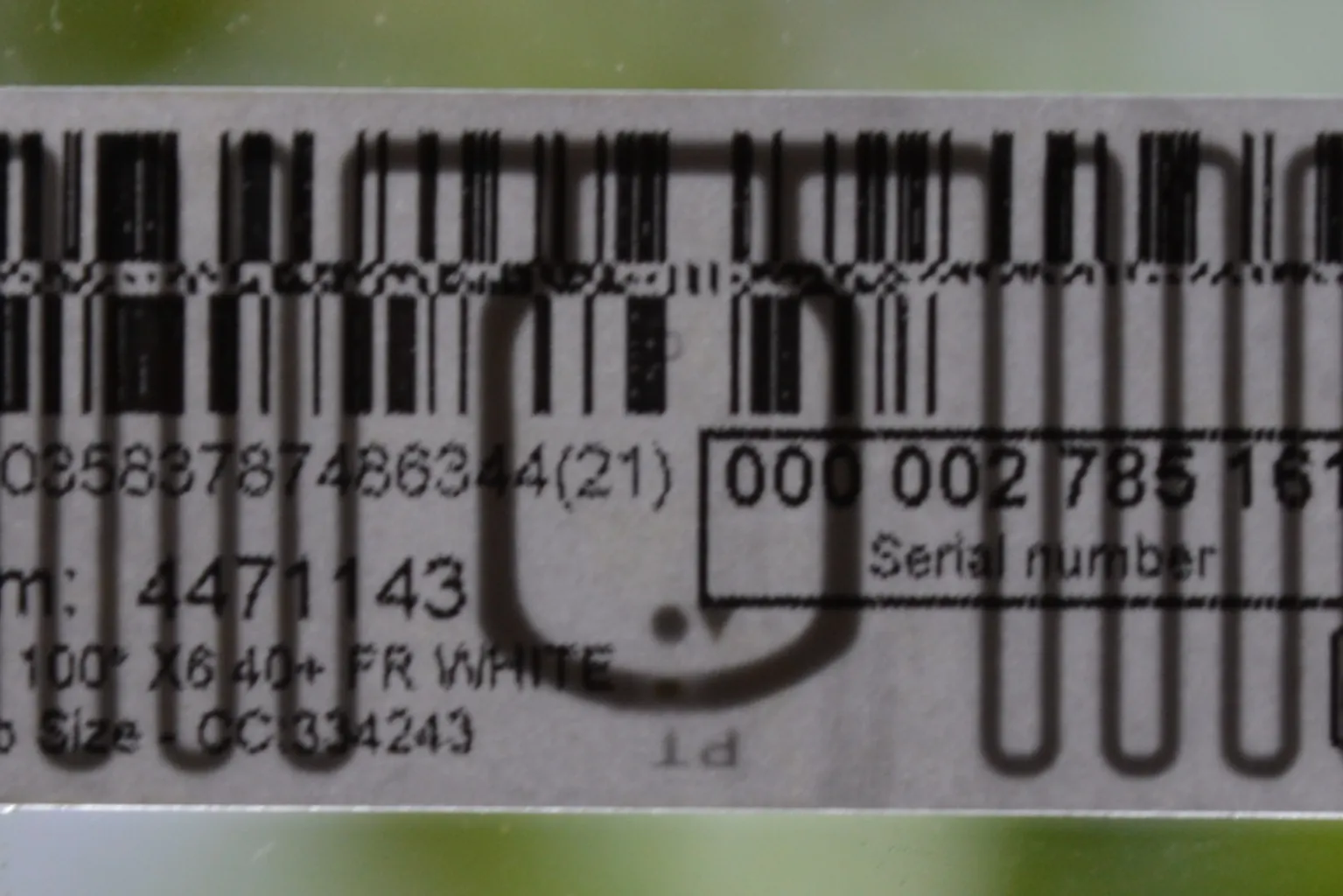
Data carriers store data about the product or link to it. They are grouped with intelligent packaging because they carry that information through the supply chain, even though they measure nothing. RFID tags come in passive, semi-passive and active forms and are used for traceability. Near-field communication (NFC) is a set of protocols built on existing RFID standards that works over 4 cm or less, so an NFC tag can be read by holding a smartphone against it.
QR codes are also becoming a legal feature of packaging. The recitals of the EU Packaging and Packaging Waste Regulation, Regulation (EU) 2025/40, say reusable sales packaging should carry a QR code or another standardised, open digital data carrier, and that where the product must have a digital product passport under Regulation (EU) 2024/1781 or other Union law, that passport should also be used to provide the information. Such a code describes the pack and its contents without monitoring the food, which is the test in the 450/2009 definition.
Sensors
Sensors turn a chemical or physical change into a signal, often electronic and sometimes wireless. A 2025 review in Foods by Davidescu and colleagues finds that their large-scale use in food packaging is limited by the unit cost of sensor components, the specialised printing or integration steps they need, and the data infrastructure to read them.
Modified atmosphere packaging: where many of these systems sit
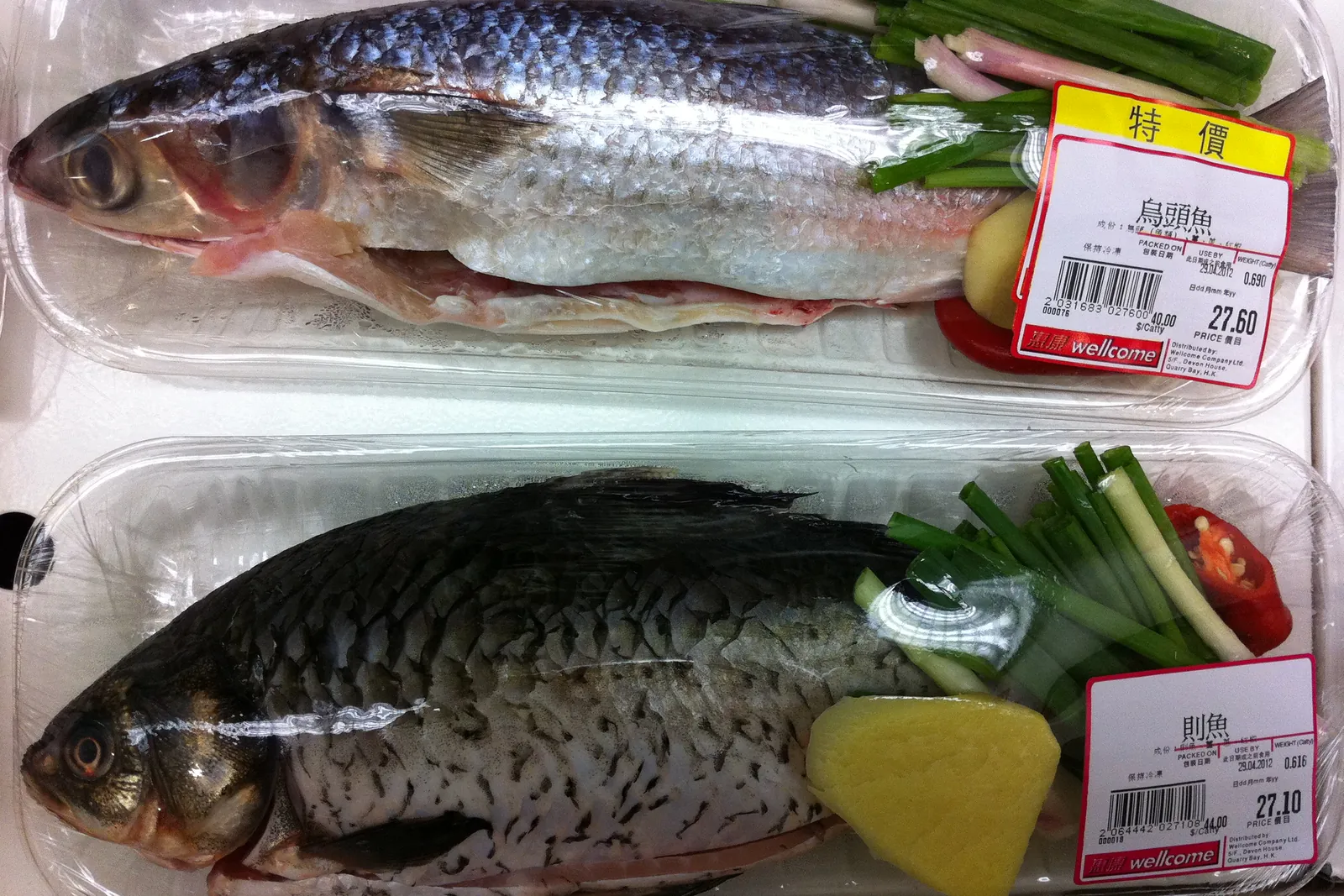
Modified atmosphere packaging (MAP) replaces the air in a pack with a chosen gas mixture before sealing. The mix is set at the moment of sealing, and active and intelligent components are added to many MAP packs to help hold that atmosphere or to show whether it has held.
Nitrogen is mostly a filler gas that prevents pack collapse and displaces oxygen. Carbon dioxide extends shelf life. High oxygen, around 80%, keeps red meat bright red. Wikipedia's article on modified atmosphere packaging gives these typical mixes:
- red meat: 80-85% oxygen, 15% carbon dioxide
- poultry: 25% carbon dioxide, 75% nitrogen
- fish: 60% carbon dioxide, 40% nitrogen
- cheese: 100% carbon dioxide
- bread: 70% carbon dioxide, 30% nitrogen
- fresh pasta: 100% nitrogen
- fruit and vegetables: 3-5% oxygen, 3-5% carbon dioxide, 85-95% nitrogen
Active and intelligent packaging types at a glance
| Type | Mechanism | Example product or format | Typical foods | Active or intelligent |
|---|---|---|---|---|
| Oxygen scavenger | Iron powder oxidises, taking up oxygen | Ageless sachet (Mitsubishi Gas Chemical) | Nuts, dried meat, fresh pasta, bakery, coffee | Active |
| Ethylene scavenger | Potassium permanganate oxidises ethylene; zeolite or activated carbon adsorbs it | Permanganate on silica or alumina in sachets | Fruit and vegetables | Active |
| Moisture absorber | Desiccant or superabsorbent polymer takes up water | Silica gel sachet; drip pad | Dry foods; fresh meat, poultry, fish | Active |
| Carbon dioxide absorber | Chemical sorbent takes up carbon dioxide | Sachet in coffee pack | Fresh roasted coffee | Active |
| Carbon dioxide emitter | Reaction releases carbon dioxide | Ageless type G; FreshPax type M | Meat, fish, bakery | Active |
| Ethanol emitter | Sachet releases ethanol vapour | Ethicap, Antimold | Bakery | Active |
| Antimicrobial film | Releases agent such as silver ions or organic acids | Silver or zinc oxide nanocomposite films (mostly research) | Meat, cheese, produce | Active |
| Antioxidant film | Releases tocopherol or plant extract | Whey protein film with rosemary extract (research) | Cured meat, fatty foods | Active |
| Time-temperature indicator | Diffusion, enzymatic or polymerisation reaction changes colour with time and temperature | 3M MonitorMark, Vitsab, Fresh-Check, Timestrip | Chilled and frozen foods, seafood | Intelligent |
| Freshness indicator | pH dye reacts to amines or carbon dioxide from spoilage | Bromocresol green or anthocyanin label (mostly research) | Fish, seafood, poultry | Intelligent |
| Oxygen indicator | Colour change in presence of oxygen | Ageless Eye tablet | MAP and scavenger packs | Intelligent |
| Data carrier | Stores or links to product data | RFID tag, NFC tag, QR code | Any packaged food | Intelligent (information only) |
How to tell which one a product is
Ask what the component does to the food. If it takes something out of the pack or puts something into it, it is active. If it only changes its own appearance, or stores data, it is intelligent.
Loose sachets, pads and inserts are almost always active, and in the EU they carry "DO NOT EAT" if they could be mistaken for food. Labels with coloured windows or dots on the outside of the pack are usually intelligent. A film sold as "antimicrobial" or "antioxidant" is active if it releases a substance; if the claim refers only to how well the film blocks gases, it is a passive barrier.
Labelling and the EU list of authorised substances
Under Article 11(1) of Regulation 450/2009, active and intelligent materials, or parts of them, must be labelled whenever they are perceived as edible, so that consumers can identify the non-edible parts. The label carries the words "DO NOT EAT" and, where technically possible, the symbol reproduced in Annex I of the regulation. The labelling rules have applied since 19 December 2009. Regulation 1935/2004 also requires these materials to be labelled for the businesses that use them, with information on their permitted uses and on the substances the active component releases.
The composition rules depend on a list that does not yet exist. Article 5 of Regulation 450/2009 says only substances on the Community list, now called the Union list, of authorised substances may be used in components of active and intelligent materials. The Commission is to adopt the list after EFSA has given its opinion on every substance with a valid application.
The register covers applications received by national contact points before 15 February 2011. EFSA has published opinions on many of these substances, such as the 2014 opinion on the oxygen absorber and carbon dioxide emitter sachet, but an EFSA opinion is not an authorisation.
Some limits apply regardless of the list. Under Article 10, migration from components that are not in direct contact with the food, because they sit behind a functional barrier, must not exceed 0.01 mg/kg. Article 9(2) says a released active substance does not count toward the overall migration value of the packaging.
How the US regulates them
In the United States, substances that go into packaging, including the ones that make it active, are handled through FDA's food contact routes, most often a Food Contact Notification (FCN). FDA's description of its review programme lists antimicrobials and antioxidants among the substances it covers.
An FCN is a premarket notification under section 409(h) of the Federal Food, Drug, and Cosmetic Act. FDA has 120 days to review it, and if the agency does not object in that time, the company can legally market the substance for the notified use. An effective FCN applies only to the substance and the manufacturer or supplier named in it, so a competitor making the same substance must file its own.
What holds adoption back
Cost comes first. A sachet or label adds a component, a supplier and a packing step to a product that may sell for very little. Davidescu and colleagues note that methods such as co-extrusion and microencapsulation raise costs enough to limit many active films to high-value perishable foods, and sensors add component and data costs on top.
Consumers often do not know what they are looking at. A 2020 systematic review in Frontiers in Sustainable Food Systems reports that, in one survey it covers, intelligent packaging was familiar to 17% of respondents and active packaging to 4%. It also cites confusion over reading time-temperature indicators, worries about the toxicity of indicator materials, fear of accidentally eating sachets, and the extra cost passed on to shoppers.
Regulation adds uncertainty: in the EU the missing Union list leaves composition to national authorities, and Davidescu and colleagues name divergent national frameworks as a barrier to international sales. Recyclability is a further worry. In a 2011 study cited by the 2020 review, consumers feared that active and intelligent packaging might prevent the use of biodegradable materials or make packs less recyclable, and a sachet, pad or tag is an extra component, usually of a different material from the pack.
Reliability is the last issue. An indicator that changes colour while the food is still fine leads to waste, and one that fails to change gives false confidence. Each indicator has to be matched to the spoilage behaviour of one food, which is part of why most freshness indicators remain research prototypes while oxygen absorbers, drip pads and time-temperature labels are in everyday use. More on packaging and 3D printing materials is on the nanopack.org home page.
Frequently asked questions
What is the difference between active and intelligent packaging?
Active packaging changes the conditions inside the pack by absorbing or releasing substances, for example an oxygen absorber sachet. Intelligent packaging leaves the food alone and reports on its condition or history, for example a label that changes colour after a temperature breach.
What are examples of active packaging?
Common examples are iron-based oxygen absorber sachets, potassium permanganate ethylene scavengers for fruit, absorbent drip pads under meat and fish, carbon dioxide absorbers in fresh coffee packs, ethanol-emitting sachets for bakery products, and antimicrobial or antioxidant films.
What are examples of intelligent packaging in food?
Examples include time-temperature indicators such as 3M MonitorMark, Vitsab, Fresh-Check and Timestrip, oxygen indicators such as Ageless Eye, pH-dye freshness indicators for fish, and data carriers such as RFID tags, NFC tags and QR codes.
Why do oxygen absorber sachets say DO NOT EAT?
Under Article 11 of EU Regulation 450/2009, active and intelligent components that could be perceived as edible must carry the words "DO NOT EAT" and, where technically possible, a standard symbol. The rule helps consumers identify non-edible parts of the pack.
Is smart packaging the same as intelligent packaging?
"Smart packaging" is an informal umbrella term that is often used for both active and intelligent packaging together. EU law defines only the two separate categories, active and intelligent, and regulates them in the same regulation.
Is there an EU list of approved substances for active and intelligent packaging?
Regulation 450/2009 provides for a Union list of authorised substances, but the Commission has not adopted it. Until it does, the Commission's register of pending applications applies only as information, and the use of these substances is regulated at national level.
Sources
- Commission Regulation (EC) No 450/2009 on active and intelligent materials and articles intended to come into contact with food (EUR-Lex)
- Regulation (EC) No 1935/2004 on materials and articles intended to come into contact with food (EUR-Lex)
- Active and intelligent materials and articles that come into contact with food, summary (EUR-Lex)
- Food contact materials legislation (European Commission)
- Register of substances for which a valid application for authorisation was submitted under Regulation (EC) No 450/2009, version 1.1 (European Commission)
- Active and intelligent materials (EFSA)
- Oxygen absorber CO2 emitting sachet backed by EFSA (FoodNavigator, on EFSA Journal 2014;12(2):3571)
- About the FCS review program (US FDA)
- Inventory of effective food contact substance (FCS) notifications (US FDA)
- Biji KB et al. Smart packaging systems for food applications: a review. J Food Sci Technol, 2015
- Mariah et al. The emergence and impact of ethylene scavengers techniques in delaying the ripening of fruits and vegetables. Membranes, 2022
- Nanofillers in novel food packaging systems and their toxicity issues. Foods, 2024
- Zhang et al. A novel indicator based on polyacrylamide hydrogel and bromocresol green for monitoring the total volatile basic nitrogen of fish. Foods, 2023
- Andrade MA et al. Evaluation of the oxidative status of salami packaged with an active whey protein film. Foods, 2019
- Davidescu et al. Advances and challenges in smart packaging technologies for the food industry. Foods, 2025
- A systematic review of consumer perceptions of smart packaging technologies for food. Frontiers in Sustainable Food Systems, 2020
- Daniel V, Lambert FL. Ageless oxygen scavenger: practical applications. WAAC Newsletter 15(2), 1993
- AGELESS oxygen absorber (Mitsubishi Gas Chemical)
- Food and seafood temperature indicators (Timestrip)
- Regulation (EU) 2025/40 on packaging and packaging waste (EUR-Lex)
- Modified atmosphere (Wikipedia)
- Time temperature indicator (Wikipedia)
_-_Boston,_MA.jpg)

