- Warping is thermal shrinkage: the edges of a part cool faster than its centre and pull the corners up. Prusa puts ABS shrinkage at around 1-2%.
- Bambu Lab ranks the risk from highest to lowest as PC, PA-CF, PA, ABS, ASA, PETG, PLA, and says large flat ABS, ASA or PC parts almost always warp without an enclosure.
- Clean the plate first. Bambu Lab washes with dish soap and warm water; Prusa wipes with isopropyl alcohol of at least 90% and keeps soap for when adhesion fades.
- Raise the bed by 5-10 °C for PLA and by 10-15 °C for ABS and ASA, and turn the part cooling fan off for the first three layers.
- Add an 8-10 mm brim, or brim ears on the corners that lift. For ABS, ASA and PC Blend, Prusa suggests a skirt raised into a draft shield.
- Keep windows, air conditioning and desk fans away from the printer. Bambu Lab says even PLA can warp in a room below 20 °C.
3D prints warp because plastic shrinks as it cools, and the edges of a part cool faster than its middle. The pull between them lifts the corners off the bed. Work through the fixes in this order: wash the build plate, raise the bed temperature by 5-10 °C, add a brim or brim ears at the corners that lift, keep drafts away from the printer, and for ABS, ASA, nylon or polycarbonate close the printer or enclose it. If a large flat part still curls, print it in PLA or PETG instead.
This page is built on Prusa's knowledge base articles on warping, ABS and first layer problems, on Bambu Lab's troubleshooting guide for warping and its build plate cleaning guide, all read on 26 October 2026, and on filament data sheets for the numbers. The PLA vs PETG vs ABS comparison explains why ABS shrinks more than the other two, and the ASA settings page gives bed and chamber figures for one of the materials that warps most.
Why prints warp
Bambu Lab's guide calls the root cause thermal shrinkage: the outer edges of a print cool faster than the centre, and the tension this creates pulls the corners up. Prusa's warping article describes the same thing as a sudden temperature difference between the hot nozzle and the surrounding air, and sets the goal as reducing the thermal shock the part receives. Both say the problem grows with the size of the part. Bambu Lab adds high infill density to the list.
The amount of shrinkage depends on the plastic. Prusa puts ABS at around 1-2%. Polymaker's data sheet for its HT-PLA gives 0.88% in the XY plane and 0.13% in Z. On a part 200 mm long, 1% is 2 mm.
Warping does not always look like a lifted corner. Bambu Lab notes that a slight lift can leave defects on side walls and top layers that are easy to mistake for an extrusion or flow problem. A horizontal ripple on the side of a model, where the nozzle hit the raised edge, is one sign.
Which filaments warp most
| Material | What the guides say |
|---|---|
| PC | Highest risk in Bambu Lab's ranking. Prusa names PC Blend with ASA and ABS as the materials warping mostly affects. |
| PA-CF | Second in Bambu Lab's ranking: nylon filled with carbon fibre. |
| PA (nylon) | Bambu Lab says ABS, ASA, PA and PC need an enclosed printer with a heated chamber, and that nylon absorbs moisture within hours. |
| ABS | Prusa lists significant warping as a drawback, recommends a bed of 80-110 °C and an enclosure with a higher ambient temperature. |
| ASA | Warps less than ABS, according to Prusa, but still on its list of high temperature materials that warp. |
| PETG | Low risk. Prusa describes it as barely shrinking or warping. |
| PLA | Lowest risk, but Bambu Lab says it can still warp in a room below 20 °C. |
Bambu Lab's advice for large flat models follows from the ranking. Printed in ABS, ASA or PC without an enclosure, they will almost always warp, so on an open printer it suggests PLA, PLA-CF, PETG or PETG-CF instead. The engineering grades are covered in the high temperature filaments guide.
Why prints lift on the bottom layers
A print that comes off the bed entirely has a different problem from one that curls at the corners. Bambu Lab separates the two. Warping is the corners lifting while the middle holds. Adhesion failure is the whole part shifting, sliding or popping off partway through, caused by too little grip between the first layer and the plate.
Bambu Lab names skin oil as the most common cause of poor adhesion. The other two it lists are a nozzle set too high for the first layer and the wrong plate type selected in the slicer. On its printers the plate type matters twice. Sliced for the Cool Plate at 35 °C but printed on the Textured PEI Plate, which needs 55-65 °C for PLA, the bed runs far too cold. The textured plate also makes the printer lower the nozzle by 0.04 mm during levelling, and that offset is lost when the slicer is set to another plate.
Prusa's warping article suggests lowering Live Adjust Z slightly for better adhesion, without squashing the first layer too much. It also warns that PETG and PC can bond so well that they damage a PEI surface. Its first layer guide suggests printing the first three layers at about 75% of normal speed.
Clean the build plate first
Bambu Lab says three steps fix about 80% of warping and adhesion failures: cleaning the plate, running automatic bed levelling and checking that the nozzle is seated correctly. It recommends washing the plate with warm water and dish soap, rinsing it, letting it dry and not touching the surface with bare hands afterwards. For the textured plate it explains why: alcohol may only spread the oil around in the texture, while detergent and a sponge reach into it. A plate is clean when rinse water spreads into a thin film. If the water runs off in streams and beads, the surface still holds grease.
Prusa puts isopropyl alcohol of at least 90% first and falls back on dish soap and warm water, not hot, when adhesion fades even with alcohol. It advises against doing this often. Acetone is for Prusa's smooth PEI sheet only, about once a month and not before a PETG print. Bambu Lab says never to use acetone on its textured plate, and Prusa says the same for its textured and satin sheets.
Bed temperature and the first layers
The quickest slicer change is the bed temperature. Bambu Lab's table suggests adding 5-10 °C for PLA with lifting corners, to 55-65 °C on the Textured PEI Plate, and 10-15 °C for ABS and ASA, with the doors and top cover closed so the chamber reaches 40 °C or more. In a room below 20 °C, on an open frame printer such as the A1, it suggests another 10 °C on the bed. Prusa's first layer guide gives the same 5-10 °C rise for a new material that will not stick.
Bambu Lab also suggests turning the part cooling fan off for the first three layers, using the "No cooling for first X layers" setting. That keeps the first layers warmer while they bond to the plate.
Brims, brim ears and draft shields
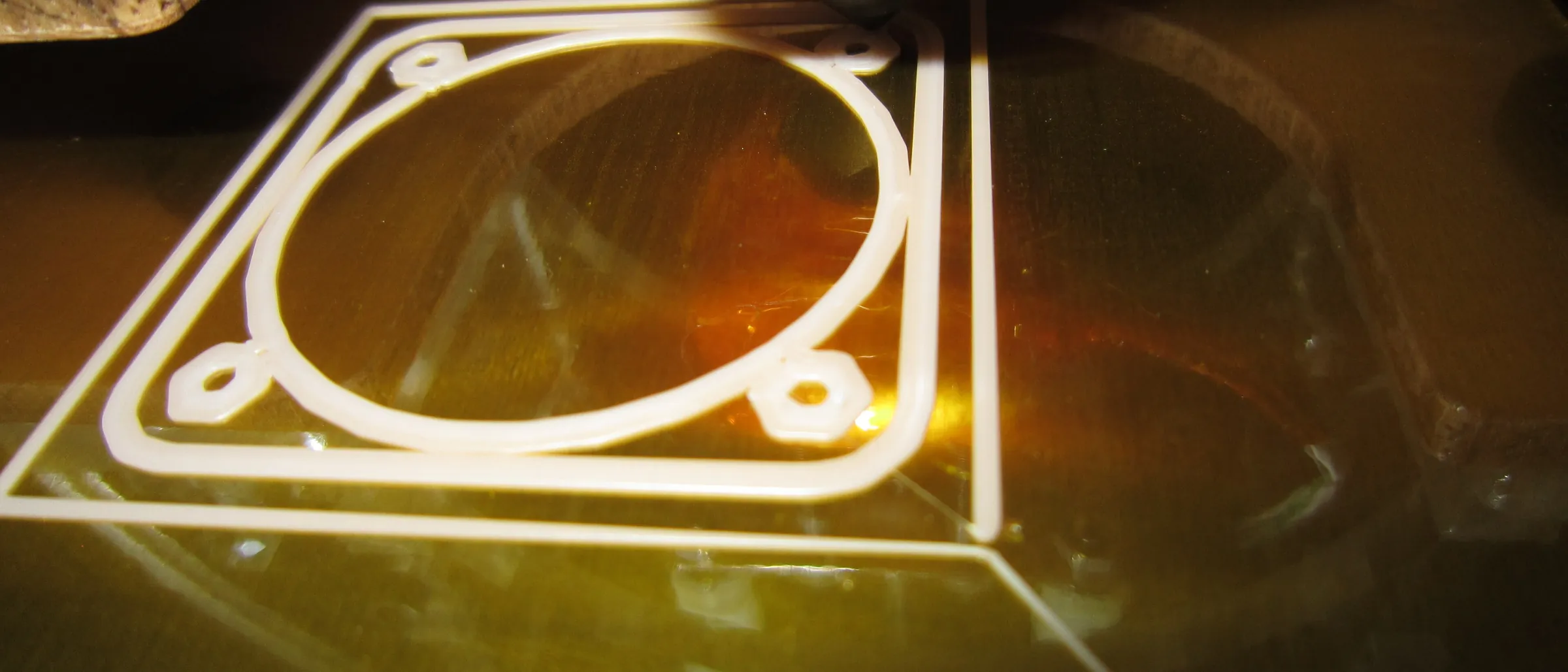
A brim is a flat ring of extra lines around the first layer, so the part grips a larger area. Bambu Lab suggests one 8-10 mm wide for PLA with lifting corners. When only the corners lift, it suggests brim ears, which are small brim patches painted onto the corners in Bambu Studio. Prusa's version of the same idea, for when a brim is not enough, is a small temporary feature such as a tiny cylinder placed at the problem area and printed only a few layers tall so that it is easy to remove.
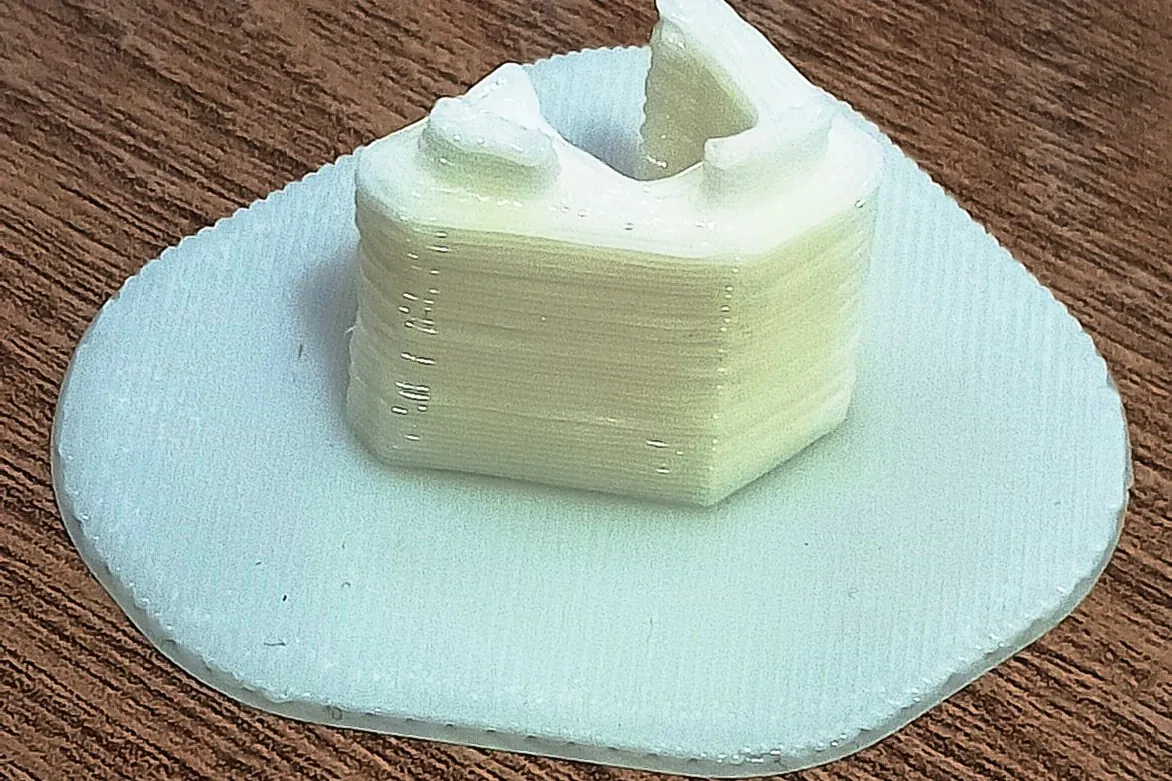
A skirt raised into a draft shield keeps heat around the part. Prusa recommends it for ABS, ASA and PC Blend, says that printing several objects at once also helps, and suggests turning problem areas towards the centre of the bed. For ABS on an open printer, Prusa's ABS article proposes the draft shield as the substitute for an enclosure. Slower printing helps too: Prusa says high warping materials settle and fuse better at lower speed, and names its own PC Blend as a material that warps less than others but still benefits.
Cooling, drafts and room temperature
Fan speed works both ways. For PLA and PETG, which Prusa says need a lot of cooling, lifting corners are a reason to check that the print fan runs, is not blocked and is set high enough. For ABS or PC Blend, Prusa allows a low 10-20% for overhangs and small details, and warns that too much fan can lift the whole object. Bambu Lab suggests turning the auxiliary part cooling fan down by about 20-30% when it cools outer walls too fast, mostly on small objects.
Moving air from outside the printer does the same damage. Both Prusa and Bambu Lab name open windows and air conditioning, and Bambu Lab adds desk fans, which cool one side of a print faster than the other. Prusa suggests an enclosure for anyone who mostly prints high temperature materials, and says PLA and PETG generally should not be printed in one, because they need strong cooling.
Infill pattern and wet filament
For large flat parts Bambu Lab recommends gyroid infill at 25% or less. Its reasoning is that grid and triangle patterns build linear tension inside the part, while gyroid shrinks more evenly in every direction. It also lists wet filament as a cause: crackling or popping during printing, or a rough, bubbly surface, means the spool has taken up water and needs drying before another attempt. The filament drying guide gives temperatures and times by material.
Warping after printing: how hot PLA can get
A finished part can also warp from heat long after it leaves the bed. For PLA the limit is low. Bambu Lab's PLA Basic data sheet gives a glass transition of 60 °C and a heat deflection temperature of 57 °C under 0.45 MPa and 54 °C under 1.8 MPa. In Prusa's annealing tests PLA test bars changed size noticeably after 30 minutes at 70 °C. The PLA, PETG and ABS comparison sets these heat figures against PETG and ABS.
Frequently asked questions
What is the cause of warping in 3D printing?
Uneven cooling. Plastic shrinks as it cools, and the outer edges of a print cool faster than its centre, so the tension pulls the corners up off the bed. Prusa describes it as thermal shock from the gap between nozzle and air temperature.
Why are my 3D prints warping on the bottom?
Either the corners are shrinking faster than the bed can hold them, or the first layer is not gripping the plate. Bambu Lab names skin oil on the plate as the most common adhesion problem, followed by a nozzle set too high for the first layer and the wrong plate type selected in the slicer.
How do I print without warping?
Wash the build plate, raise the bed temperature by 5-10 °C, add a brim or brim ears, and keep drafts away from the printer. Print ABS, ASA, nylon and PC in an enclosed printer, and switch large flat parts to PLA or PETG if you have no enclosure.
Which filament warps the least?
PLA, followed by PETG. Bambu Lab ranks warping risk from highest to lowest as PC, PA-CF, PA, ABS, ASA, PETG and PLA, and Prusa describes PETG as barely shrinking or warping.
Does a brim stop warping?
It helps by giving the first layer more area to hold the bed. Bambu Lab suggests an 8-10 mm brim for PLA, or brim ears painted only onto the corners that lift. Prusa also suggests a small temporary feature a few layers tall at the problem spot.
How hot can PLA get before it warps?
Not very hot. Bambu Lab's PLA Basic data sheet gives a glass transition of 60 °C and heat deflection at 57 °C under 0.45 MPa, and in Prusa's annealing tests PLA bars changed size noticeably after 30 minutes at 70 °C.
Sources
- Prusa Knowledge Base: Warping
- Prusa Knowledge Base: ABS
- Prusa Knowledge Base: PETG
- Prusa Knowledge Base: First layer issues
- Bambu Lab Wiki: Warping, falling off and collapsing
- Bambu Lab Wiki: Textured PEI plate cleaning guide
- Polymaker HT-PLA technical data sheet V1.1 (shrinkage)
- Bambu PLA Basic technical data sheet V3.0
- Prusa blog: How to improve your 3D prints with annealing