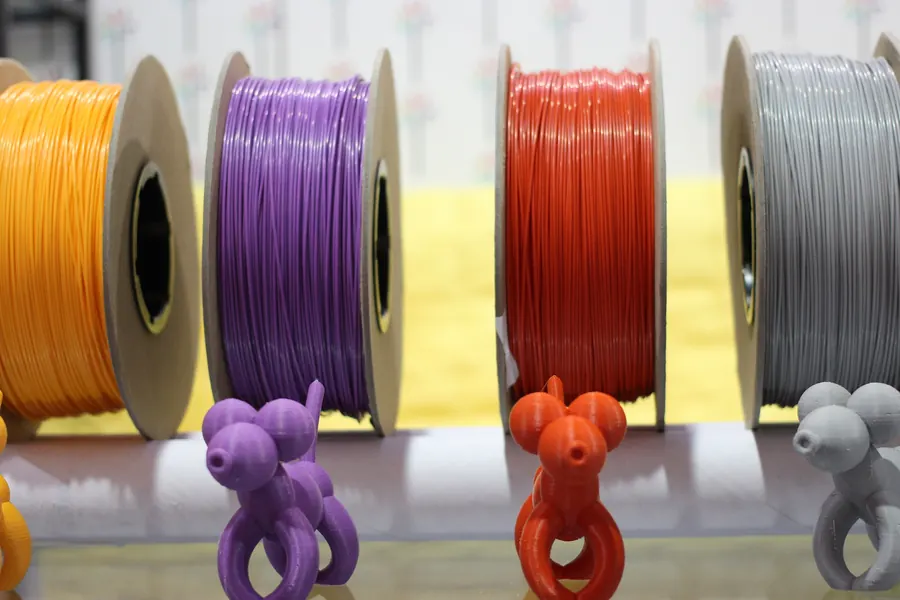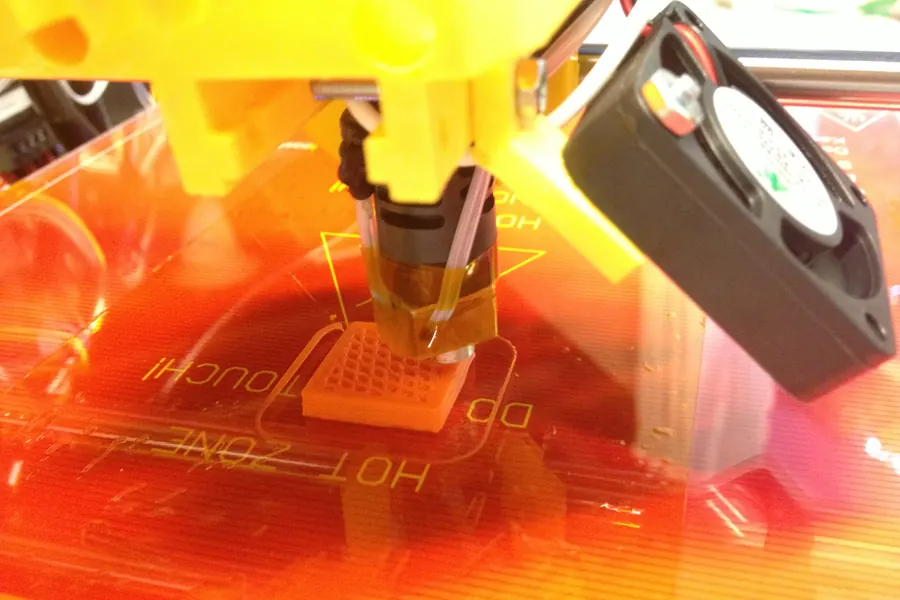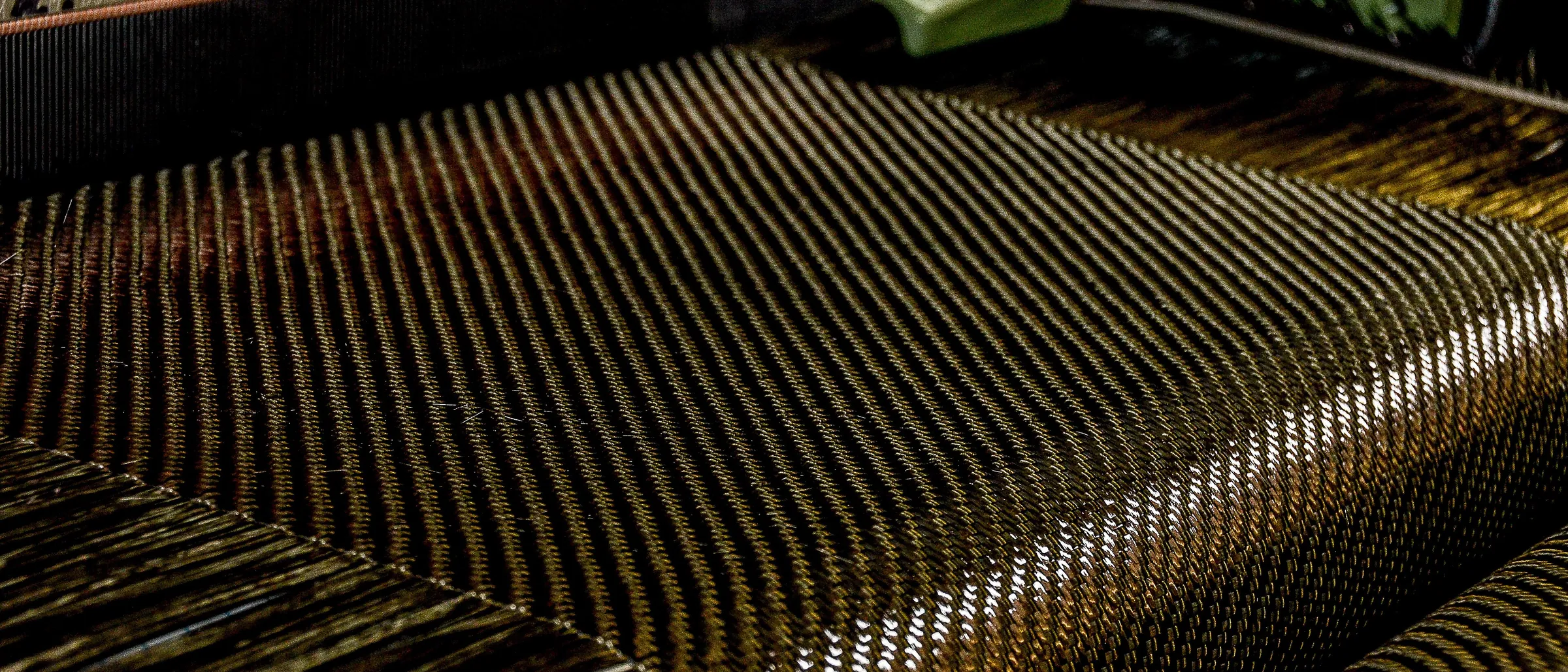
- Carbon fiber filament is a normal PLA, PETG or nylon filament filled with chopped carbon fibers well under a millimeter long, which mainly raise stiffness and dimensional stability.
- In same-brand data sheets, carbon fiber nearly tripled the tensile modulus of ColorFabb's copolyester while tensile strength stayed at about 55 MPa and notched impact strength halved.
- Carbon fiber PLA has the same heat deflection temperature as plain PLA (54 °C at 1.8 MPa in Bambu Lab's data), while carbon fiber nylons list 170-196 °C.
- Graphene and carbon nanotube filaments conduct only above a percolation threshold, reported at about 1-1.5 wt% for nanotubes and 6-9 wt% for graphene nanoplatelets in PLA studies.
- Conductive filaments measure roughly 0.6-115 ohm-cm depending on product and print direction, enough for sensors and low-current circuits but not for power wiring.
- Fiber-filled filaments wear brass and stainless nozzles quickly, so manufacturers recommend hardened steel or ruby nozzles, with 0.6 mm as the usual first choice.
Carbon fiber filament is an ordinary 3D printing plastic, usually PLA, PETG or nylon, loaded with chopped carbon fibers well under a millimeter long. Graphene and carbon nanotube filaments use nanoscale carbon instead, mostly to make the plastic conduct electricity. In both cases the filler mainly changes stiffness, dimensional stability and, for the nano grades, conductivity. Tensile strength and impact toughness often stay flat or fall, and layer bonding rarely improves. The large strength gains associated with carbon fiber come from continuous fiber, which needs a different kind of printer.
The numbers below come from manufacturer technical data sheets and open-access papers, and they vary a lot between brands. For the unfilled base plastics, see PLA vs PETG vs ABS; the filament types chart covers the rest of the range.
What carbon fiber filament actually contains
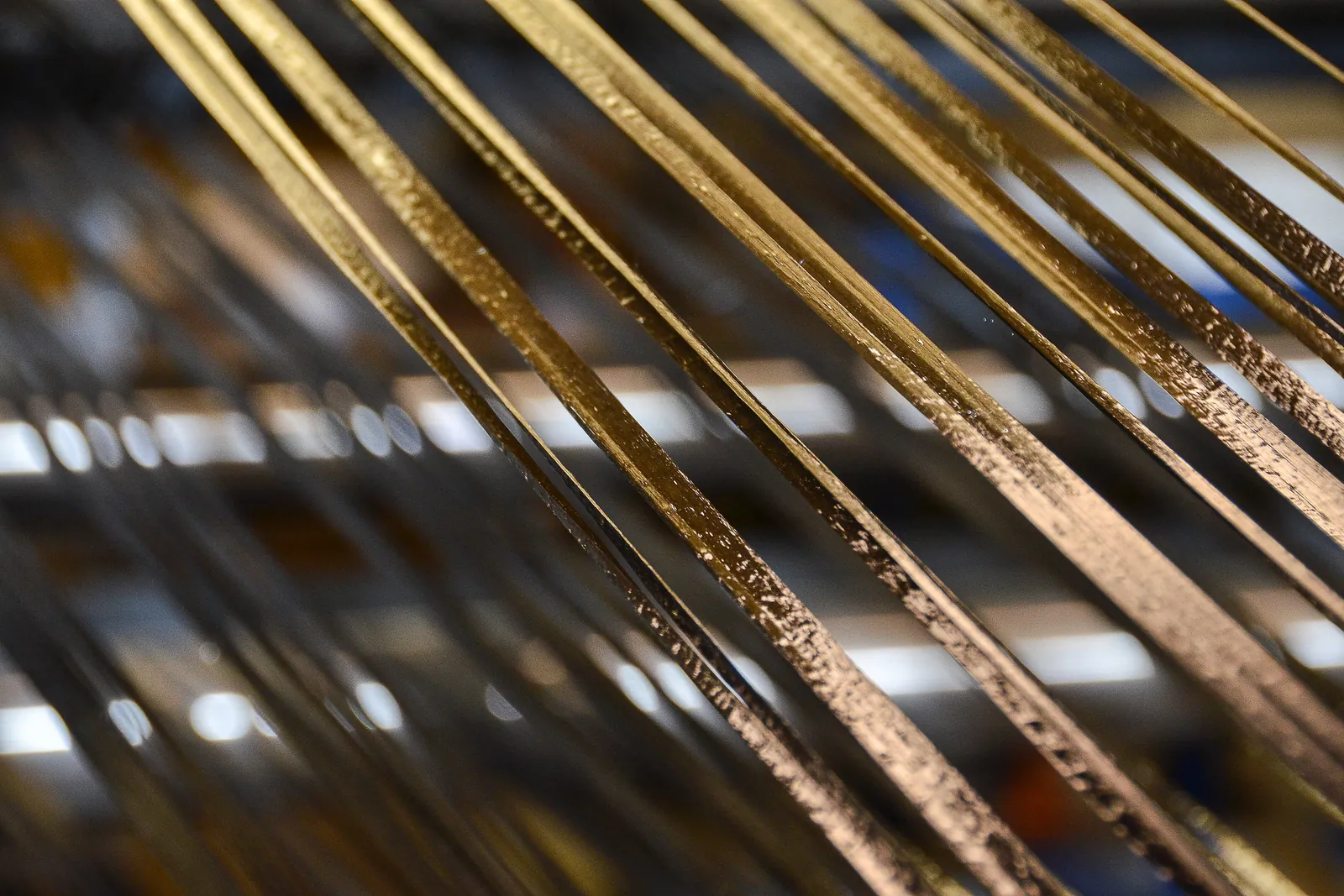
A spool of CF filament is a thermoplastic matrix with short carbon fibers compounded into it. Markforged, which sells both kinds of fiber printing, describes its own chopped-fiber nylon as fibers "less than a millimeter long" suspended in the plastic, and notes that in its terms this blend is "not technically a composite" because the fibers are mixed into the plastic and are not laid as distinct reinforcement.
The fibers are short. In a 2023 study of Markforged's Onyx, a nylon with chopped carbon fiber, Hou and Panesar measured fibers about 140 µm long and 7 µm across, making up roughly 9% of the volume. At that size each piece of fiber is only about 20 diameters long.
Fiber content is often not stated. ColorFabb says its XT-CF20 is an Eastman Amphora AM1800 copolyester with 20% carbon fiber. Bambu Lab's PLA-CF data sheet lists the composition only as "polylactic acid, carbon fiber", and Prusament says the fibers in its PETG Carbon Fiber come from recycled production waste and end-of-life composites. When a brand gives no percentage, the mechanical table on its data sheet is the only guide to how much the fiber does.
The matrix still sets most of what matters in use: heat resistance, chemical resistance, moisture uptake and how the plastic prints. The fiber adds stiffness, and Bambu Lab and Prusa both cite better dimensional stability for their filled grades. It also gives the surface a matte, slightly rough texture; Bambu Lab describes its PLA-CF prints as having "almost invisible layer lines" and pitches them for parts that need a non-glossy look.
Chopped fiber vs continuous fiber printing
Continuous-fiber printing lays an unbroken strand of fiber along a planned path inside the part. Markforged's printers extrude a plastic such as Onyx from one nozzle and feed the fiber intact through a second nozzle; a thin plastic coating on the fiber melts so it bonds to the surrounding matrix. Markforged calls this Continuous Fiber Fabrication.
Anisoprint uses a related method it calls composite fiber co-extrusion. Its carbon or basalt fiber arrives pre-impregnated with a polymer, and the printer co-extrudes it with a thermoplastic that binds the strands together. In research printers, Matsuzaki and colleagues (2016) fed a carbon fiber tow and a PLA filament separately and impregnated the fiber inside the heated nozzle.
That difference in fiber length is the main reason for the difference in strength. Matsuzaki's printed PLA reached a tensile strength of 42.6 MPa and a modulus of 3.25 GPa. With continuous carbon fiber at only 6.6% fiber volume, the same process gave 185.2 MPa and 19.5 GPa. Markforged gives the stiffness of its continuous carbon fiber as about 60 GPa, close to aluminum's 69 GPa. A chopped-fiber PLA-CF from Bambu Lab lists a tensile modulus of 2.79 GPa.
Continuous fiber only reinforces the direction it runs in. Carbon fiber composites have strongly directional properties, which is why continuous-fiber slicers let you choose where fiber goes. Chopped-fiber filament gives a smaller stiffness gain within each printed layer and little reinforcement across layers, where the bond between tracks carries the load.
Even with short fibers, the printing process costs some of the gain. Hou and Panesar found printed Onyx had a modulus of 3.88-4.57 GPa against 6.67 GPa for the same material injection molded. They traced the loss to the interfaces between printed tracks: modulus fell linearly with interface density, by up to 18%, and the voids between tracks were larger in the fiber-filled nylon (75-93 µm) than in plain nylon (29-47 µm).
Is carbon fiber filament stronger?
Carbon fiber filament is usually stiffer than its base plastic, and not usually stronger in tension. The clearest evidence comes from brands that publish data sheets for a filled and an unfilled grade tested the same way.
| Property | Bambu PLA Basic | Bambu PLA-CF | ColorFabb XT | ColorFabb XT-CF20 |
|---|---|---|---|---|
| Tensile modulus | 2580 MPa | 2790 MPa | 1850 MPa | 5143 MPa |
| Bending modulus | 2750 MPa | 3950 MPa | n/a | n/a |
| Tensile strength | 35 MPa | 38 MPa | 55 MPa | 55.8 MPa |
| Tensile strength, Z (across layers) | 31 MPa | 26 MPa | n/a | n/a |
| Elongation at break | 12.2% | 8.4% | 6.2% | 2.0% |
| Notched Charpy impact | 7.9 kJ/m² | 7.6 kJ/m² | 5.0 kJ/m² | 2.45 kJ/m² |
| HDT at 1.8 MPa | 54 °C | 54 °C | 62 °C (resin supplier) | not given |
In the ColorFabb pair, 20% carbon fiber nearly triples tensile modulus while tensile strength stays the same. Elongation at break falls from 6.2% to about 2%, and notched impact strength halves. The filled part bends less before it breaks, and it breaks with less warning.
Bambu's PLA-CF gains 44% in bending modulus and a little tensile strength in the X-Y plane. Across layers it is weaker than PLA Basic: 26 MPa against 31 MPa in Z tensile, and 7.8 against 13.8 kJ/m² in Z impact. Bambu describes PLA-CF as built on a "tough PLA" blend, so the two are not the same base resin, which makes the layer-direction drop more telling.
Brands differ enough that the label alone tells you little. Prusament PETG Carbon Fiber lists a tensile modulus of 1.7 GPa, a third of XT-CF20's figure, and Prusa says its toughness is lower than standard PETG. What Prusa's grade gains is heat resistance, covered in the next section.
Nylon is where CF filament posts the numbers people expect. Polymaker's PolyMide PA6-CF data sheet gives a dry tensile modulus of 7.45 GPa and tensile strength of 105 MPa in X-Y, and 67.7 MPa across layers. Polymaker describes the grade as having outstanding layer adhesion, and its across-layer figure is higher than the in-plane tensile strength of the CF-PLA and CF-PETG grades above.
Carbon fiber filament temperature resistance
Carbon fiber raises the heat deflection temperature (HDT) of some matrices and not others. HDT is the temperature at which a standard bar deflects a set amount under a fixed load, usually 0.45 MPa or 1.8 MPa in ISO 75, and it is a short-term test.
For PLA the fiber does little. Bambu lists 54 °C at 1.8 MPa for both PLA Basic and PLA-CF, so a CF-PLA bracket in a hot car will soften at about the same point as plain PLA. Bambu suggests annealing PLA-CF parts at 55-60 °C for 6-12 hours and warns that some parts may deform or warp when annealed.
PETG-CF can gain more. Prusament lists 96 °C at 0.45 MPa and 80 °C at 1.8 MPa for its PETG Carbon Fiber. Nylon grades sit much higher: Bambu PAHT-CF, based on PA12 and other long-chain polyamides, lists 194 °C at 0.45 MPa and 170 °C at 1.8 MPa, and Polymaker's PA6-CF lists 215 °C and 196 °C. Those figures come from solid test bars (Polymaker's specimens were printed at 100% infill and annealed), and a thin-walled part with sparse infill will not reach them.
Glass fiber filament
Glass fiber filament uses chopped glass instead of carbon, most often in nylon. It is less stiff than the carbon version of the same matrix and is also abrasive. Polymaker's PA6-GF lists a dry tensile modulus of 4.43 GPa against 7.45 GPa for its PA6-CF, with tensile strength of 84.5 MPa and HDT of 124 °C at 1.8 MPa.
Bambu's PA6-GF lists a modulus of 2.85 GPa, tensile strength of 75 MPa in X-Y and 27 MPa across layers, and HDT of 158 °C at 1.8 MPa. Bambu describes it as more cost effective than its other top-tier engineering filaments. Glass avoids carbon's black color and its electrical conductivity. Anisoprint makes the same distinction in its continuous-fiber system, offering basalt fiber as a non-conductive, radio-transparent alternative to carbon.
Nanoscale fillers and the percolation threshold
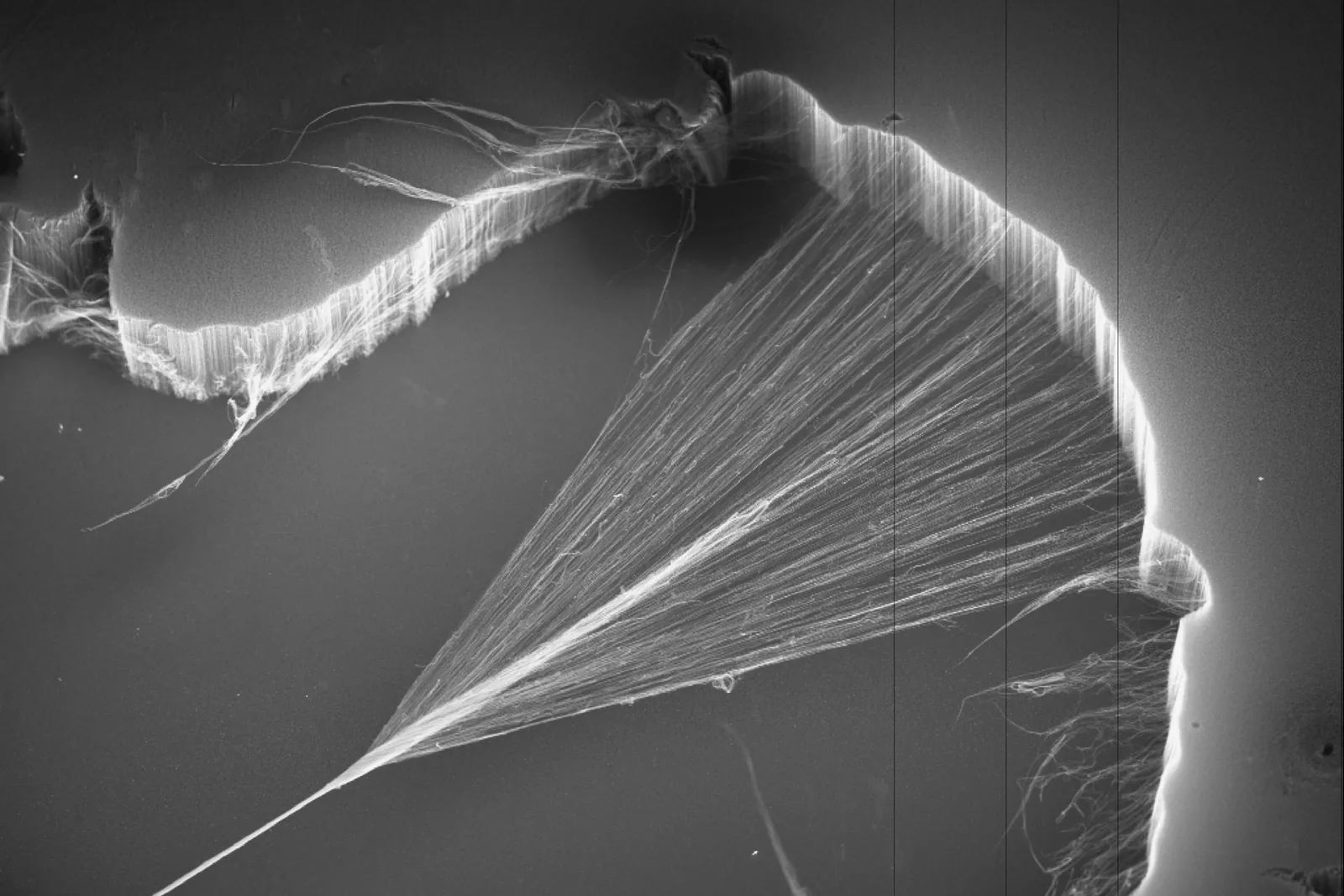
Nanoscale carbon fillers are far smaller than carbon fiber. A single-walled carbon nanotube is roughly 0.5-2 nm across, against about 7 µm for the carbon fibers in Onyx, and graphene is a sheet of carbon one atom thick. The PLA studies cited below used graphene nanoplatelets (stacks of graphene layers) and multi-walled nanotubes.
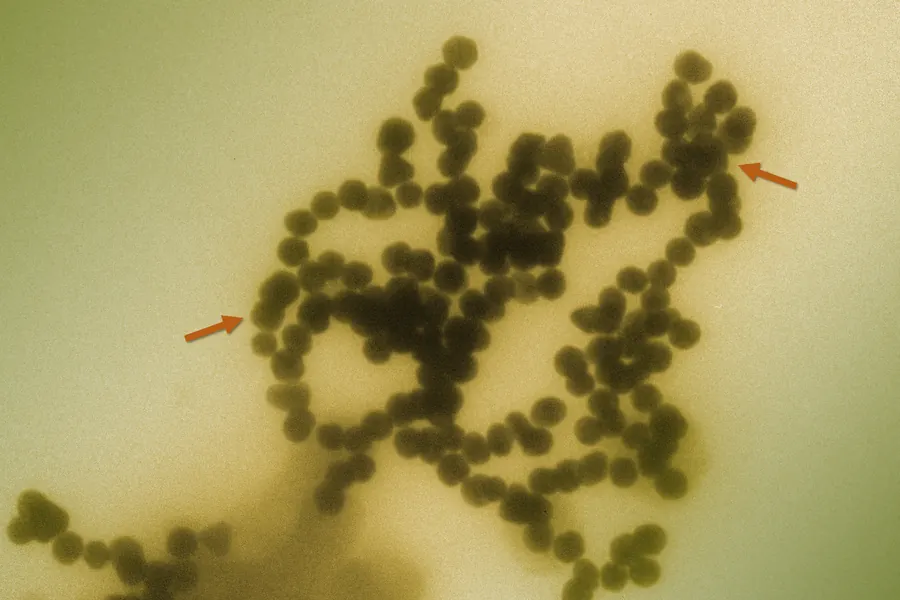
The main thing these fillers are used for in filament is electrical conductivity, and that behaves in a threshold way. Below a certain loading the particles sit apart in the plastic and the composite remains an insulator. At the percolation threshold, neighboring particles start to form a continuous path through the material and conductivity rises by orders of magnitude over a small increase in filler.
The threshold depends on the filler's shape and how well it is dispersed. Beltrán and colleagues (2023) put the DC percolation threshold of their PLA-nanotube composites at 1 wt%. A 2019 study of PLA filaments found about 1.5 wt% for multi-walled nanotubes and 6-9 wt% for graphene nanoplatelets. Dispersion changed the result in that work too: segregated filler networks gave the highest conductivity, while aggregated filler gave the highest stiffness and the lowest conductivity.
Printing also costs conductivity. The same study found the extruded filament more conductive than 3D-printed or hot-pressed samples made from it, and attributed the difference to the orientation the filler takes on during filament extrusion. A filament's resistivity on the spool is therefore a best case for the printed part.
The same platelet physics runs through the packaging half of this site. Clay and graphene platelets in barrier films work only when they are spread out and separated, and clumps behave like a coarse filler. The page on nanotechnology in food packaging covers that side, where the goal is slowing gas diffusion instead of carrying current.
Graphene filament: what the graphene does
In a filament sold as conductive, graphene forms the conductive network. Black Magic 3D's conductive graphene PLA is listed with a volume resistivity of 0.6 ohm-cm, a limit of 12 V and 100 mA, a print temperature of 220 °C, a nozzle larger than 0.5 mm, and a note that the material softens at about 50 °C. Koltron G1, a PVDF filament with graphene, measured about 3.1 ohm-cm as filament in a 2023 study by Stankevich and colleagues, and 2.1-2.3 ohm-cm after annealing.
Graphene nanoplatelets also raise thermal conductivity. Spinelli and colleagues (2019) measured 0.183 W/m·K for their unfilled PLA and 0.664 W/m·K with 12 wt% graphene nanoplatelets, about 3.6 times higher; 12 wt% nanotubes gave 0.365 W/m·K. The same composites blocked most microwave energy in the 26-37 GHz band, with shielding rising from 4% for plain PLA to 95% for a mixed-filler grade.
The gap between marketing and data sheets is widest here. "Graphene-enhanced" on a label says nothing about how much graphene is present or whether it is above the percolation threshold. Conductivity, thermal conductivity or stiffness only change if the loading and dispersion are right, and a product that publishes no resistivity, no thermal conductivity and no modulus gives you nothing to check the claim against. Treat such a filament as an ordinary plastic until you have measured it.
Carbon nanotube filament and nanoclay
Carbon nanotube filaments are sold for the same purposes as graphene grades: conductivity, static dissipation and some stiffening. Three commercial CNT filaments tested by NIOSH researchers contained 1.5-5.2 wt% elemental carbon. For comparison, PLA studies report nanotube percolation thresholds of about 1-1.5 wt%.
Nanoclay filaments are mostly still at the research stage. Grigora and colleagues (2022) printed PLA with 1-4 wt% montmorillonite clay and a chain extender. At 4 wt%, compressive strength rose from 67.3 MPa to 94.3 MPa, the storage modulus at 35 °C rose from 3.17 GPa to 3.85 GPa, and nanoindentation modulus rose by 48%. Clay is an electrical insulator, so it is used for stiffness and barrier properties, the side covered on the packaging page.
Conductive filament resistance
Conductive filaments have resistivities from under 1 ohm-cm to over 100 ohm-cm, depending on product and print direction. That is enough for sensors and small signals and far too high for power wiring. Proto-pasta's conductive PLA, a compound of NatureWorks 4043D PLA, a dispersant and carbon black, is the most widely documented.
Proto-pasta gives 15 ohm-cm for the molded resin, 30 ohm-cm for printed parts measured along the layers and 115 ohm-cm through the layers. A 10 cm length of 1.75 mm filament measures roughly 2-3 kΩ. Stankevich and colleagues measured the filament at 3.1-5.1 ohm-cm and single printed tracks at 10-15 ohm-cm, with up to a twofold difference between print directions.
Those figures translate into real resistances quickly. A printed trace 10 cm long with a 1 mm² cross-section, at 30 ohm-cm, has a resistance of about 30 kΩ. At Black Magic 3D's listed 0.6 ohm-cm, the same trace would be about 600 Ω. Proto-pasta's own guidance is that "anything you can run through a 1K resistor should be doable."
Proto-pasta lists low-voltage circuits, touch sensors and touchscreen interaction as uses. It also rates the layer adhesion as fair, says thin sections can break along layer lines under repeated flexing, and limits heat resistance to below 50 °C. Chopped carbon fiber filaments are not a substitute: Polymaker lists a sheet resistance of 10⁸ to 10⁹ Ω/sq for its PA6-CF in the moisture-conditioned state, many orders of magnitude above a conductive grade.
Nozzle wear, clogging and nozzle size
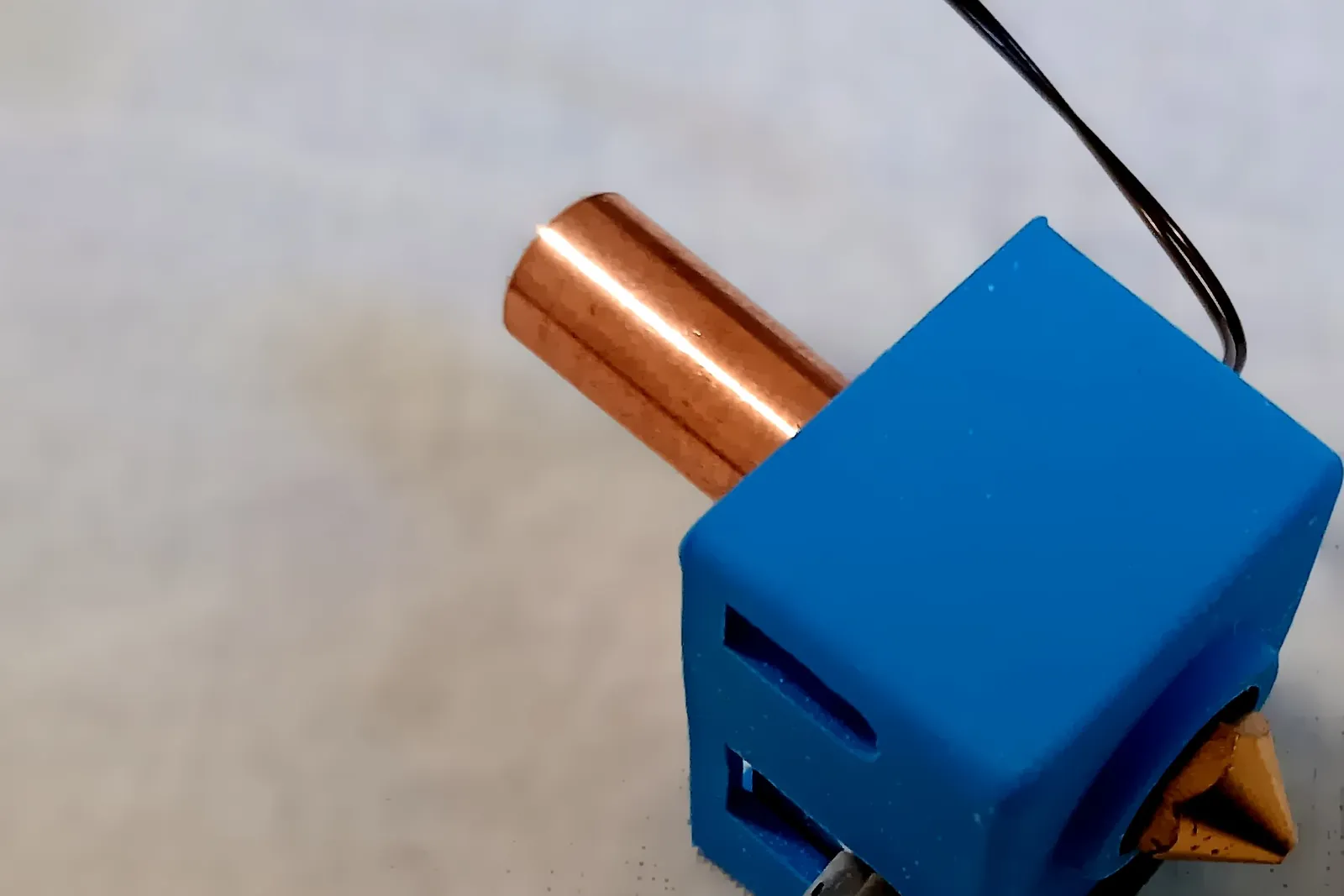
Carbon fiber and glass fiber wear through soft nozzles. Polymaker's PA6-GF data sheet puts the life of a copper nozzle at about 9 hours and recommends hardened steel or ruby-tipped nozzles. Bambu Lab's guidance for all particle-filled materials, including PLA-CF, PETG-CF, PA-CF and the glass grades, is to avoid stainless steel and brass nozzles and use hardened steel. Prusa lists a hardened nozzle as required for its PETG Carbon Fiber.
Nozzle size matters for clogging. Bambu recommends a 0.6 mm hardened steel nozzle as the first choice for filled filaments and advises against 0.2 mm nozzles entirely because the clogging risk is very high. Bambu also notes that fiber residue can build up inside the nozzle over time and raise extrusion resistance. Black Magic 3D recommends a nozzle larger than 0.5 mm for its graphene PLA and warns against leaving the filament idle in a hot nozzle, where it can expand and block it.
Wear is not limited to the nozzle. Bambu warns that abrasive filaments such as carbon fiber can gradually grind down the PTFE feed tubes in its AMS filament changer.
Moisture and CF nylon
Nylon absorbs water, and fiber does not stop it. Polymaker tested its PA6-CF dry and again after 15 days at 70% relative humidity. The tensile modulus in X-Y fell from 7.45 GPa to 5.67 GPa and tensile strength from 105 MPa to 81.7 MPa, while Charpy impact strength rose from 13.3 to 32.8 kJ/m², since the absorbed water softens and toughens the nylon.
Glass-filled PA6 changed even more in the same test. Polymaker's PA6-GF dropped from 4.43 GPa to 2.05 GPa in modulus and from 84.5 MPa to 50.8 MPa in tensile strength, and its elongation at break went from 3.4% to 19.4%. A nylon part designed from dry data sheet values will be noticeably softer after weeks in a humid room.
Long-chain nylons absorb less. Bambu lists a saturated water absorption of 0.88% for PAHT-CF (PA12 based) and 2.56% for its PA6-GF under the same conditions. Both need drying before printing (Bambu gives 80 °C for 8-12 hours) and storage below 20% relative humidity. Bambu also recommends an enclosed printer for PA-CF and PA-GF, because low ambient temperature weakens the bond between layers. PLA-CF and PETG-CF are far less sensitive: Bambu's PLA-CF lists 0.42% saturated absorption, and Prusament measured 0.1% for PETG Carbon Fiber after seven days.
Safety: dust, fibers and nanoparticles
Desktop filament printers emit ultrafine particles, and filled filaments add the filler to what comes out. NIOSH states that "printing with nanomaterial containing filaments lead to emission of nanomaterial containing particulate matter." A 2021 study by Chýlek and colleagues found that higher nozzle temperatures produced more fine particles, with final particle sizes mostly in the 40-100 nm range, and specifically named composite filaments containing metals or carbon nanotubes as needing emission control.
NIOSH researchers tested three commercial CNT filaments in a chamber (Stefaniak and colleagues, 2018). Printing released up to 10¹⁰ ultrafine particles and 10⁶ to 10⁸ respirable particles per gram of filament, and about 1% of the respirable polymer particles contained visible nanotubes. The authors concluded that if such particles are hazardous, it would be prudent to control emissions.
For free carbon nanotubes in workplaces, NIOSH recommends an exposure limit of 1 µg/m³ of elemental carbon as a respirable 8-hour average. Its bulletin bases this on pulmonary inflammation and fibrosis in animal studies and notes remaining uncertainty about chronic effects, including whether some nanotube types may cause cancer. The limit was written for occupational exposure to nanotubes and nanofibers, and a printed part holds its filler inside a polymer, but it shows why nanotube dust is treated with more care than ordinary plastic dust.
Chopped carbon fiber brings a more immediate hazard. Bambu warns that CF filaments can carry hard, microscopic barbs on their surface and cut ends, and recommends cut-resistant gloves and safety goggles when handling the filament, removing supports or sanding parts. NIOSH's 2023 guide for makerspaces, schools and small businesses covers enclosures and ventilation for printing in shared rooms. For sanding filled parts, wet sanding or dust extraction keeps the fine dust out of the air.
Filled filaments compared
| Filament | Matrix | Filler | Stiffness character | Heat resistance (HDT at 1.8 MPa) | Abrasion | Enclosure | Typical uses |
|---|---|---|---|---|---|---|---|
| CF-PLA | PLA, sometimes a toughened blend | Chopped carbon fiber, content often undisclosed | Stiffer in bending (3.95 vs 2.75 GPa in Bambu's pair), more brittle, weaker across layers | About 54 °C, same as plain PLA | High; hardened nozzle | Not needed (same chamber range as PLA) | Stiff indoor brackets, jigs, cosmetic matte parts |
| CF-PETG | PETG or copolyester | Chopped carbon fiber, 20% in XT-CF20 | Ranges from 1.7 GPa (Prusament) to 5.1 GPa (XT-CF20) tensile modulus; lower impact | 80 °C (Prusament) | High; hardened nozzle | Prusa's test parts were printed on an open-frame printer | Housings and fixtures that need more heat margin than PLA |
| CF-PA (PA6-CF, PA12-CF) | Nylon 6 or long-chain nylon | Chopped carbon fiber | 3.9 GPa (Bambu PAHT-CF) to 7.5 GPa dry (PolyMide PA6-CF); drops when wet | 170-196 °C | High; 0.6 mm hardened nozzle recommended | Recommended; dry before printing | Functional prototypes, machining fixtures, jigs, low-volume production parts |
| GF-PA | Nylon 6 | Chopped glass fiber | 2.9-4.4 GPa dry; large drop when wet | 124-158 °C | High; about 9 h copper nozzle life (Polymaker) | Recommended; dry before printing | Fixtures and parts where cost or non-conductivity matters |
| Graphene PLA | PLA | Graphene, content undisclosed | Not published for conductive grades | Softens near 50 °C | Nozzle over 0.5 mm advised | Not needed | Low-voltage circuits (12 V, 100 mA limit for Black Magic 3D); RF shielding in research |
| Conductive PLA | PLA (NatureWorks 4043D for Proto-pasta) | Carbon black | Brittle in thin sections, fair layer adhesion | Below 50 °C | Maker says no special nozzle needed | Not needed | Touch sensors, touchscreen interaction, simple circuits |
When a filled filament is worth it
A filled filament is worth the extra cost and the hardened nozzle when stiffness, dimensional accuracy or conductivity is the limiting property of the part. It is rarely worth it when the part fails by snapping, cracking along layers or deforming in heat, because short fiber rarely helps with those failures and can make the first two worse.
Cases where a filled grade usually pays off:
- A long, thin part that sags or flexes too much in PLA or PETG, such as a camera arm or a spool holder, where bending stiffness is the problem.
- A large flat part that warps, since Bambu Lab and Prusa both cite better dimensional stability for their filled grades.
- A fixture or jig that has to hold dimensions in a warm workshop, where CF or GF nylon adds both stiffness and heat resistance.
- A sensor, touch pad or low-current circuit, where a conductive grade with a published resistivity replaces wiring for small signals.
- A visible part where the matte surface and hidden layer lines matter more than toughness.
Cases where it usually does not:
- Clips, snap fits and living hinges, which need elongation that fiber reduces.
- Parts loaded across the layers, since fiber adds nothing between layers and Bambu's PLA-CF is weaker than PLA Basic in that direction.
- Parts that must survive heat in PLA, because CF-PLA has the same HDT as plain PLA; a PETG-CF or nylon base will do more.
- Loads that call for real composite strength. Continuous-fiber printing or a conventional laminate is the tool for that.
If the part only needs to be tougher, a tougher base plastic is usually the better change; the base matrix comparison covers those trade-offs. For nanofilled grades, check that the data sheet gives a measured resistivity or modulus before paying for the word "graphene". Related uses of nanoscale fillers in packaging, including sensors and indicators, are covered in active vs intelligent packaging, and the rest of this reference starts from the home page.
Frequently asked questions
Is carbon fiber filament stronger than PLA?
It is stiffer, but usually not much stronger in tension. Bambu Lab's PLA-CF lists 38 MPa tensile strength against 35 MPa for its PLA Basic, and it is weaker across layers (26 MPa against 31 MPa).
What temperature can carbon fiber filament withstand?
That depends on the base plastic. Carbon fiber PLA softens at about the same point as plain PLA (HDT around 54 °C at 1.8 MPa), carbon fiber PETG lists around 80 °C, and carbon fiber nylons list 170-196 °C on their data sheets.
Is graphene filament conductive?
Filaments sold specifically as conductive graphene grades are, with Black Magic 3D listing a volume resistivity of 0.6 ohm-cm. A filament labeled only as graphene-enhanced may contain too little graphene to form a conductive network, so check the data sheet for a resistivity figure.
Do I need a hardened nozzle for carbon fiber filament?
Yes. Carbon and glass fibers wear brass and stainless steel nozzles quickly; Polymaker estimates about 9 hours of life for a copper nozzle with its glass-filled nylon. Hardened steel or ruby-tipped nozzles are recommended, and a 0.6 mm size reduces clogging.
What is the difference between carbon fiber filament and continuous carbon fiber printing?
Carbon fiber filament contains short chopped fibers mixed into the plastic, while continuous-fiber printers such as Markforged and Anisoprint lay an unbroken fiber strand through a second feed. In one study, continuous carbon fiber raised printed PLA from 42.6 MPa to 185.2 MPa in tensile strength.
Is sanding carbon fiber or carbon nanotube prints safe?
Sanding creates fine dust containing the filler, and Bambu Lab recommends cut-resistant gloves and goggles when sanding carbon fiber parts. For nanotube filaments, NIOSH research found nanotube-containing particles released during printing, so wet sanding or dust extraction is a sensible precaution.
Sources
- Bambu Lab PLA-CF Technical Data Sheet
- Bambu Lab PLA Basic Technical Data Sheet V3.0
- Bambu Lab PAHT-CF Technical Data Sheet V3.0
- Bambu Lab PA6-GF Technical Data Sheet V1.0
- Bambu Lab Wiki: ASA CF / PAHT CF usage guide
- Bambu Lab Wiki: Filament guide material table
- ColorFabb XT-CF20 Technical Datasheet
- ColorFabb XT Technical Datasheet
- Prusament PETG Carbon Fiber (product page and technical data sheet)
- Polymaker PolyMide PA6-CF Technical Data Sheet V4.0
- Polymaker PolyMide PA6-GF Technical Data Sheet V4.0
- Proto-pasta Conductive PLA
- 3D Compare: Black Magic 3D Conductive Graphene Composite 1.75 mm
- Markforged: 3D printing composites with Markforged
- Aniwaa: Anisoprint Composer A4 review
- Matsuzaki et al. (2016), Three-dimensional printing of continuous-fiber composites by in-nozzle impregnation, Scientific Reports
- Hou and Panesar (2023), Effect of manufacture-induced interfaces on the tensile properties of 3D printed polyamide and short carbon fibre-reinforced polyamide composites, Polymers
- Stankevich et al. (2023), Electrical resistivity of 3D-printed polymer elements, Polymers
- Effects of filament extrusion, 3D printing and hot-pressing on electrical and tensile properties of poly(lactic) acid composites filled with carbon nanotubes and graphene, Nanomaterials (2019)
- Spinelli et al. (2019), Nanocarbon/poly(lactic) acid for 3D printing: effect of fillers content on electromagnetic and thermal properties, Materials
- Beltrán et al. (2023), Theoretical prediction of electrical conductivity percolation of poly(lactic acid)-carbon nanotube composites in DC and RF regime, Materials
- Grigora et al. (2022), Physicochemical characterization and finite element analysis-assisted mechanical behavior of polylactic acid-montmorillonite 3D printed nanocomposites, Nanomaterials
- Stefaniak et al. (2018), Three-dimensional printing with nano-enabled filaments releases polymer particles containing carbon nanotubes into air, Indoor Air
- Chýlek et al. (2021), Parameters influencing the emission of ultrafine particles during 3D printing, IJERPH
- NIOSH Current Intelligence Bulletin 65: Occupational exposure to carbon nanotubes and nanofibers
- NIOSH: 3D printing (additive manufacturing)
- NIOSH: Approaches to safe 3D printing (Publication 2024-103)
- Wikipedia: Carbon-fiber-reinforced polymers